
If you spend your days rushing from room to room, you know how demanding those long shifts on your feet can be. But have you ever stopped to think about how the heel height of your shoes affects your comfort, posture, and overall energy?
Maybe that’s why you should buy good shoes for yourself. And in this case, choosing the best heel height for nurse shoes isn’t just about style—it’s about making your workday easier and healthier.
Wearing the wrong heel height can cause more than just sore feet—it can lead to blisters, arch pain, and even back problems. Let’s dive into how to find the perfect heel height that keeps you comfortable and supported throughout your shift.
Why Proper Heel Height Matters in Nursing Shoes
As a nurse, you have to stand all day long on your feet. That may be the main reason you take care of your feet so much. But is that all? The answer is no. You might still be feeling achy in your lower back or legs after a day long shift. The main culprit here is your shoe’s heel height.
Nurses spend countless hours on hard hospital floors, constantly walking, standing, and rushing from room to room. The right heel height can make a world of difference in how your body handles all that stress.

Why? Because your heel height affects how your weight is distributed from heel to toe. If your heels are too high, it forces your body forward, putting extra pressure on your balls of the feet and throwing off your posture.
Too flat, and your feet don’t get the support they need, causing strain on your arches and calves. The ideal heel height provides just enough lift to keep your feet, knees, hips, and lower back aligned and comfortable throughout the day.
Think of it like a seesaw — the right balance keeps everything steady and pain-free.
So, what’s the sweet spot? Generally, a heel height of about 1 to 1.5 inches offers excellent support for nurses on their feet all day. It’s enough to ease pressure on your Achilles tendon and calves without tipping your posture out of alignment.
Curious about finding shoes that support you from head to toe? Our Best Shoes for Nurses guide dives into the top picks designed to keep you comfortable and confident during even the longest shifts.
What Is the Best Heel Height For Nurse Shoes?
You might wonder, “What’s the perfect heel height to keep my feet happy during those long nursing shifts?” Well, most experts point to a range between 1 to 1.5 inches as the ideal spot.
Why that specific height? Let’s break it down. Shoes that are completely flat might seem comfy, but they often lack the shock absorption your feet desperately need.
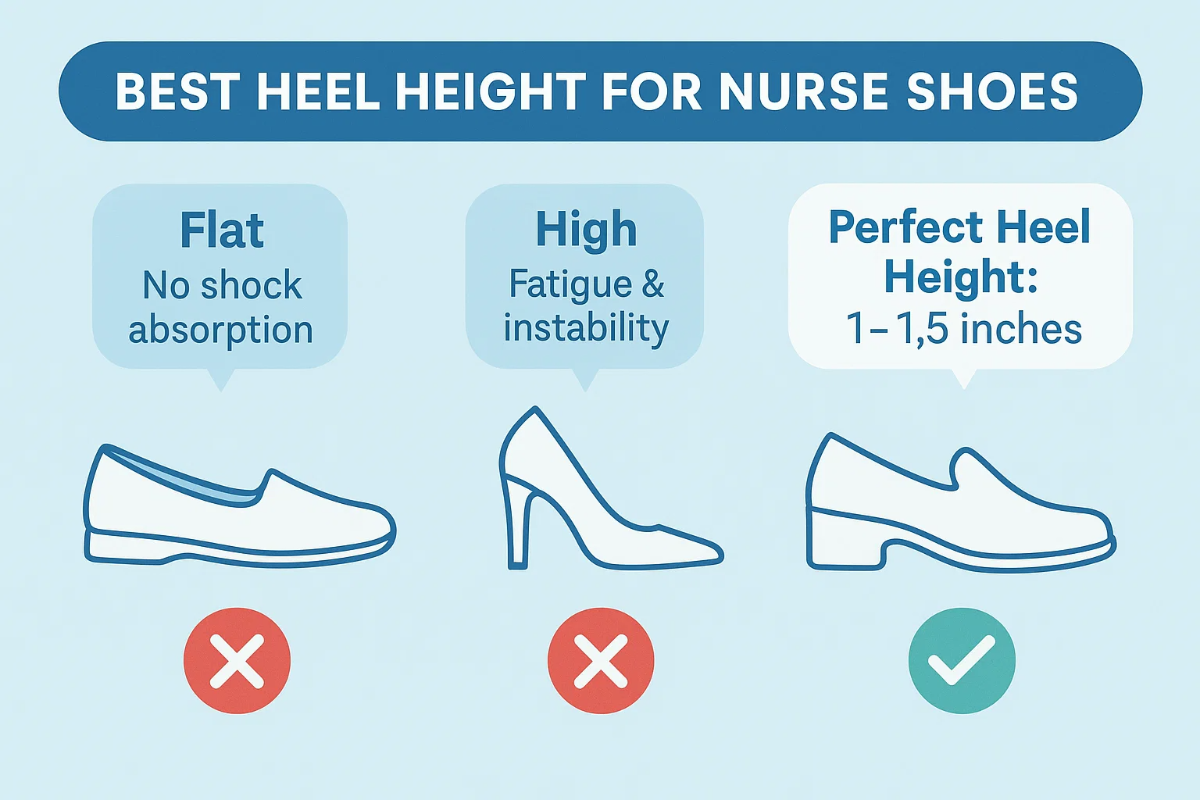
Imagine walking on a hard hospital floor all day without any cushion — ouch! On the flip side, heels that are too high can throw off your balance, making your feet work harder and increasing fatigue.
This “sweet spot” heel height is just right — it offers enough lift to help absorb impact with every step, reducing stress on your feet, ankles, and knees. Plus, it keeps you stable and balanced, which is a lifesaver when you’re moving quickly through busy corridors.
So, if you want to avoid those nagging aches and keep your energy up during marathon shifts, choosing nurse shoes with this heel height is a smart move.
How to Choose the Best Heel Height for Nurse Shoes
For nurses, only choosing the right shoes isn’t enough. The heel height also needs to be perfect. To choose the best heel height for nurse shoes, you need to consider the following factors:
1. Understanding Heel Design & Structure
When it comes to nursing shoes, not all heels are made the same — and understanding the difference can save your feet a lot of trouble. Have you ever worn a pair of shoes where the heel felt like it might give out on you? That’s usually because of poor heel design.
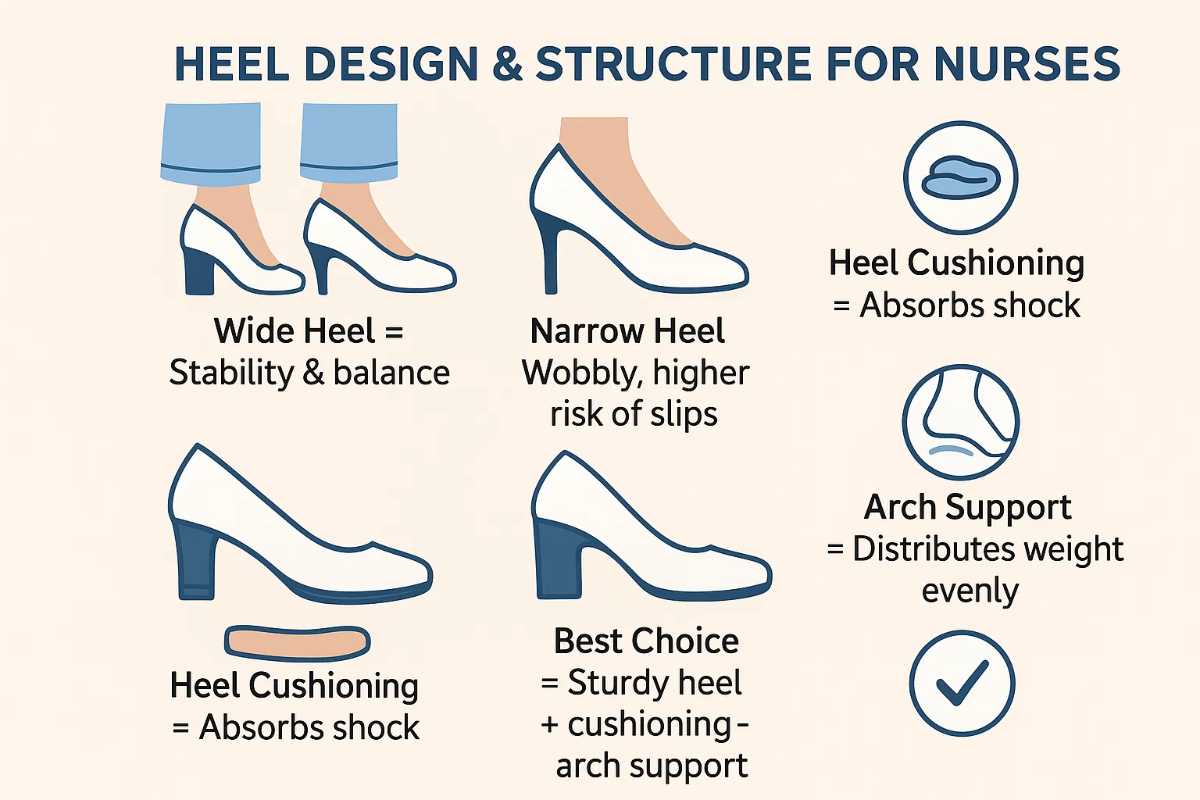
First off, heel cushioning and stability are absolute must-haves. A heel that’s too narrow can wobble with every step, increasing your risk of slips or ankle twists. In contrast, wide heels provide a solid, balanced base that helps you stay steady, even during those quick turns.
But there’s more! The heel doesn’t work alone. It teams up with built-in arch support to ease the pressure on your feet. Together, they help distribute your weight evenly and reduce strain, so your feet don’t scream at you by the end of the day.
The best heel design for hospital workers strikes the perfect balance between support and comfort. A sturdy heel structure paired with good cushioning can be the difference between sore feet and pain-free steps after a long shift.
When you shop for nursing shoes, remember: it’s not just about how the shoe looks — it’s about how it supports you from heel to toe.
2. Look For an Ergonomic Shoe Feature
If you’re on your feet all day, comfort isn’t just a nice-to-have—it’s a necessity. So, how do you find shoes that truly support your hardworking feet? Look for ergonomic features designed to cushion, protect, and reduce fatigue.
Start with padded heel collars. These soft, cushy areas around the back of the shoe cradle your heels, preventing blisters and irritation. Think of it as a gentle hug for your Achilles tendon after hours of nonstop walking.
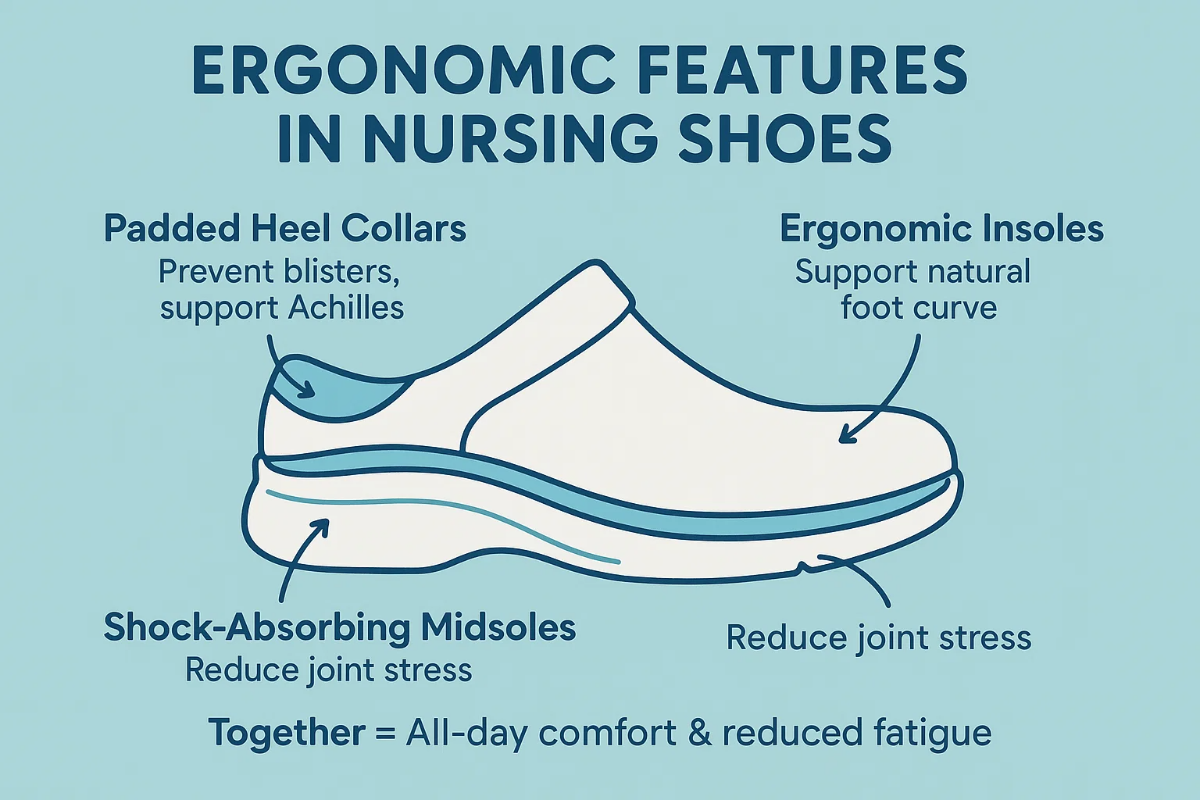
Next up: ergonomic insoles. These are specially shaped to support the natural curve of your foot. Instead of letting your foot flatten out and strain ligaments, ergonomic insoles provide targeted support where you need it most, helping to maintain proper alignment and reduce pain.
Don’t forget about the shock-absorbing midsoles—these act like mini shock absorbers in your shoes. Every step you take sends impact up through your feet, knees, and hips. Midsoles made from materials like EVA foam or gel absorb that force, easing the pressure on your joints so you feel less tired and more energized, even after a long shift.
When these ergonomic details come together, they transform your shoes into a powerful support system—working just as hard as you do.
So, next time you shop for nurse shoes, ask yourself: do these features help keep me comfortable, supported, and ready to take on whatever the day throws at me?
3. Understanding the Pros and Cons of Different Heel Heights
Choosing the best heel height for nurses also depends on heel style. This makes a huge difference in how your feet feel by the end of a long shift. Let’s break down some popular heel types and what makes each one a win—or a challenge—for nurses on the move.
- Platform Heels:
Platforms give you a little extra height without sacrificing stability. Because the sole is thick and flat, your foot sits more evenly compared to traditional heels. This means less strain on your arch and ankles. If you want a bit of a lift but don’t want to risk wobbling around the ward, platforms are a solid choice.
- Wedges:
Wedges are great at distributing your body weight across the entire foot, not just the heel. This even weight spread helps reduce pressure points and fatigue. The downside? They can sometimes feel a bit bulky or heavy. If you prefer lightweight shoes, wedges might take some getting used to—but many nurses swear by their comfort and support.
- Standard Heels:
When it comes to standard heels, size really does matter. Opt for heels that are wider and lower—think 1 to 1.5 inches—for better balance. Narrow or super high heels might look stylish but can cause instability and increase foot pain during long hours. So, if you want a classic look, choose wisely!

- Clogs (Dansko, Alegria, etc.):
Clogs have earned their reputation in healthcare for good reason. Their rocker bottoms encourage a natural walking motion, easing pressure on your feet and joints. Plus, they usually come with excellent arch support, which is a lifesaver when you’re clocking 12-hour shifts. Just a heads-up: they may not suit everyone’s style.
- Sneakers:
Sneakers are beloved for breathability and cushioning, making them a favorite for those who value a sporty feel. But watch the heel height—flat sneakers might lack shock absorption, and those with thick soles could tip the scale. Look for sneakers designed with ergonomic features that support your heel and arch.
- Slip-ons vs. Lace-ups:
Slip-ons are super convenient—no fuss, just slide them on and go. But when it comes to heel stability, lace-ups often have the edge. They allow you to tighten the fit around your ankle, which is especially important when you’re darting between patient rooms or rushing down hospital corridors.
So, which heel type fits your work style? Whether you lean toward clogs, wedges, or trusty sneakers, the best shoe for your shift balances support, comfort, and your personal preference.
4. Understanding the Signs That Your Heel Height May Be Wrong
Have you ever finished a long shift only to find your heels throbbing or your back aching? Or maybe you’ve caught yourself wobbling awkwardly while rushing down a hallway. These are all signs your heel height might not be doing you any favors.
Here’s what to watch out for:
- Heel pain after shifts:
If your heels feel sore or sharp pain creeps in after a day on your feet, the height (or lack of proper cushioning) could be the culprit.
- Lower back discomfort:
Surprising as it sounds, your shoes’ heel height can impact your posture. Too high or too flat can throw off your spinal alignment, leading to nagging lower back pain.

- Feeling unstable or slipping:
Have you noticed yourself shuffling cautiously or losing your footing? The wrong heel height can mess with your balance, making each step a mini challenge.
- Increased fatigue or leg cramps:
When your shoes don’t support your natural gait, your muscles have to work overtime, leaving you exhausted or cramping by the end of your shift.
If any of these sound a little too familiar, it might be time to reconsider your shoe choice. Remember, comfort isn’t a luxury — it’s essential for your health and performance at work.
How to Choose the Best Heel Height for Nurse Shoes: Expert Tips
Buying nursing shoes isn’t just about style—it’s about finding the perfect fit that supports your long hours on your feet. Here are some expert tips to help you choose the right heel height and avoid discomfort down the road:
1. Try Shoes on at the End of the Day:
Ever notice how your feet feel a little swollen after a long shift? That’s totally normal! Trying on shoes when your feet are at their largest gives you a more accurate sense of fit—so you won’t end up with shoes that feel tight or painful by mid-shift.
2. Opt for Shoes with Cushioned Insoles:
A well-cushioned insole absorbs impact, reduces pressure on your heels and balls of your feet, and keeps you comfortable during long shifts.
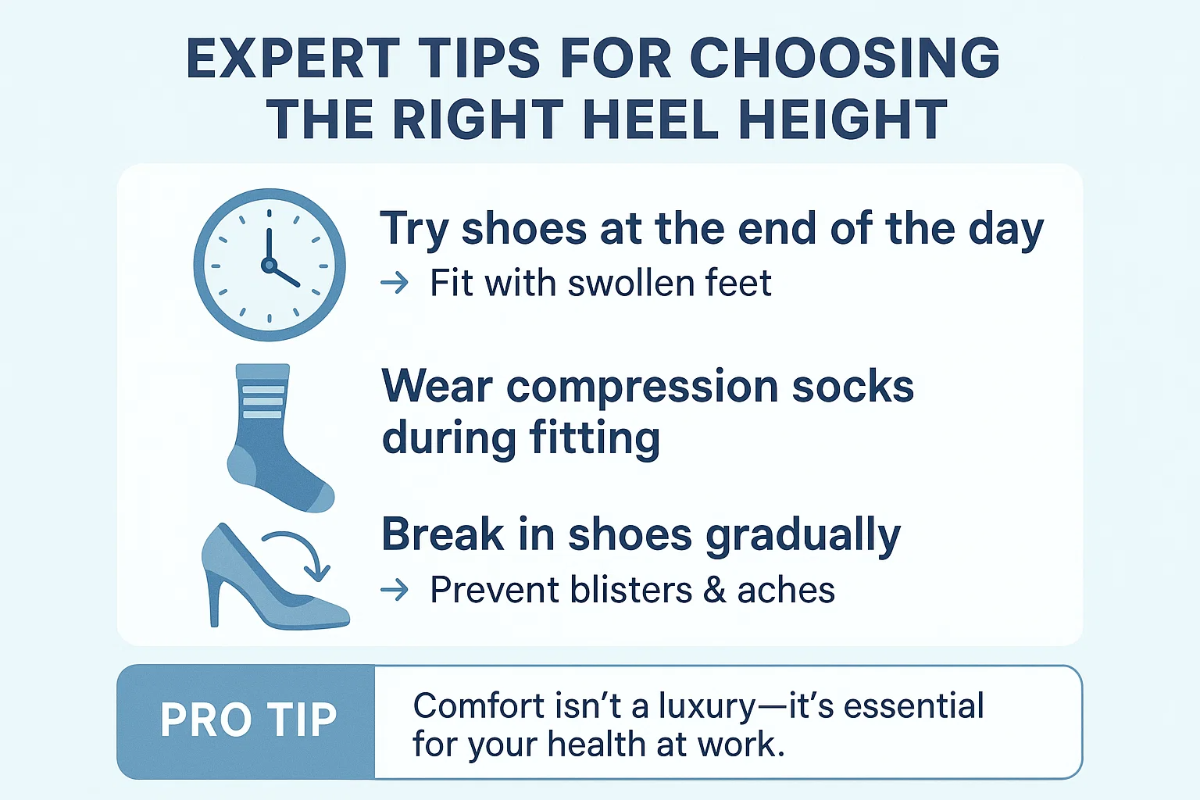
3. Wear Compression Socks During the Fitting:
If you use compression socks during work, bring them with you when trying on shoes. This ensures your shoes have enough room and won’t pinch or restrict circulation.
4. Break in Your Shoes Gradually:
Don’t expect new shoes to feel perfect right out of the box. Give yourself time to wear them around the house or during short errands. This helps soften the materials and molds the shoes to your feet, reducing the risk of blisters or aches during those marathon shifts.
Choosing the right heel height isn’t just about measurement—it’s about listening to your feet and understanding how your body moves throughout the day. Your feet will thank you!
Conclusion
Choosing the best heel height for nurse shoes is all about finding the perfect balance between comfort and health. After all, your shoes are the foundation that carries you through long, demanding shifts—so it’s worth investing in ergonomic features that support not just your feet, but your legs and back too.
Remember, staying comfortable and supported means you can focus on what matters most—taking great care of your patients with confidence and energy. Here’s to happy feet and smoother shifts ahead!
FAQs About Choosing The Best Heel Height for Nurses
What heel height is best for standing 12-hour shifts?
Around 1 to 1.5 inches offers the best balance of comfort and support.
Are flat shoes bad for nurses?
Flat shoes often lack shock absorption, which can lead to foot fatigue.
Can high heels cause foot strain at work?
Yes, heels that are too high can throw off your posture and increase strain.
How does heel height affect posture during long shifts?
Proper heel height helps distribute weight evenly, easing back and joint pain.
What’s the safest heel type for hospital workers?
Wider, lower heels or supportive clogs tend to be safest.
Leave a Reply