
Nursing is a job that demands your mind, heart, and—most of all—your feet. After 12-hour shifts, you’ve probably felt the heavy ache in your legs, the soreness in your arches, and maybe even that little voice in your head saying, “I can’t do this again tomorrow.”
That feeling? It’s not just tiredness—it’s the beginning of burnout. And yes, the shoes you wear can make a big difference.
When we talk about footwear and nurse burnout, we’re really talking about a hidden link: the connection between physical comfort and mental resilience. Choosing the right shoes can help you fight fatigue, improve your mood, and even protect your long-term well-being.
Footwear and Nurse Burnout- 6 Proven Tips for Comfort
1. Understanding the Connection Between Footwear and Nurse Burnout
Burnout in nursing isn’t simply about being “tired” — it’s a deeper, more complex state that blends emotional exhaustion, physical depletion, and a drop in motivation.
It creeps up over time, often disguised as just another tough week, until you realize it’s affecting not just your work performance, but also your life outside the hospital.
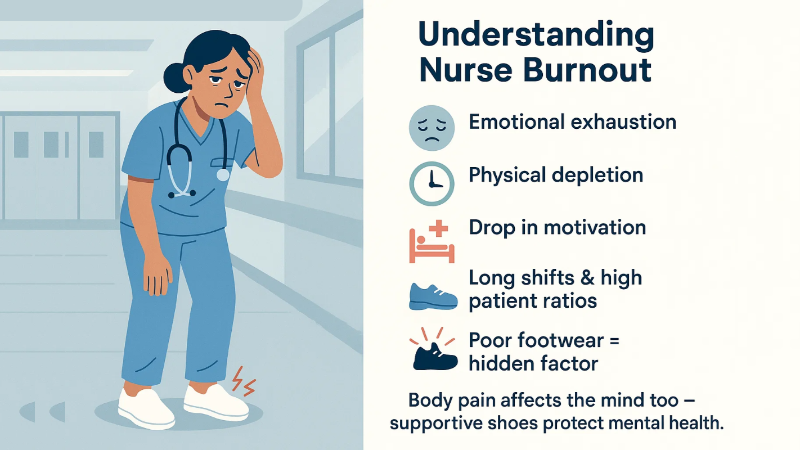
The roots of footwear and nurse burnout run deep. Long, back-to-back shifts, high patient-to-nurse ratios, and the emotional weight of patient care all play a role. But one factor nurses often underestimate is physical strain from poor equipment, especially shoes.
The constant pounding on hard floors, the lack of arch or heel support, and the irritation of ill-fitting footwear can turn each step into a small battle — one that slowly chips away at your energy reserves.
And here’s the hidden truth: when your body is in pain, your mind feels it too. Discomfort makes it harder to focus, easier to feel irritable, and more difficult to maintain the patience and empathy your job demands. That’s why high-quality, supportive footwear isn’t just a “nice-to-have” — it’s a vital part of your mental health strategy.
As we explain in our Nurse Foot Care Tips, even small improvements in comfort can lead to significant boosts in energy, mood, and overall resilience.
2. Uncomfortable Shoes Can Cause Nurse Burnout
Shoes with weak arch support, thin or worn-out cushioning, or rigid, unforgiving soles force your body to work overtime just to maintain balance and stability. Every step you take requires micro-adjustments from your muscles and joints, and while you might not notice it in the first hour, that constant effort starts to add up.
By midday, your legs can feel heavy, your posture may start to slump, and your energy reserves begin to dip — not because you skipped lunch, but because your footwear has been quietly sapping your stamina all morning. And the effects don’t stop at your feet.
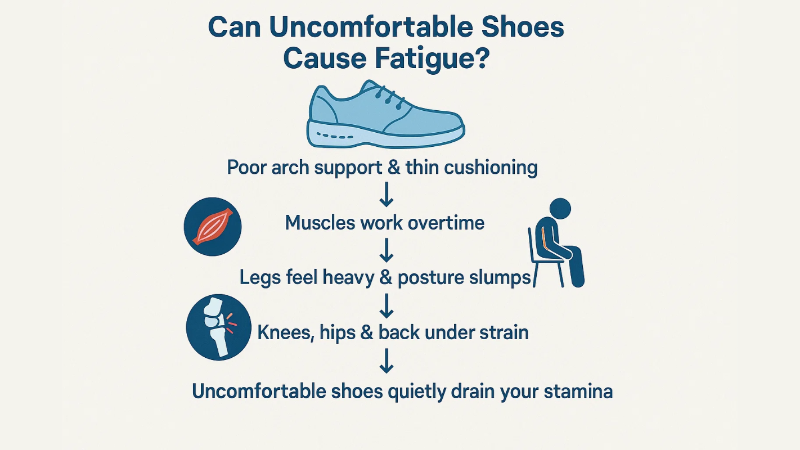
Poorly designed shoes can throw your entire body out of alignment, putting extra strain on your knees, hips, and lower back. That chain reaction increases overall fatigue, making the end of a shift feel like you’ve just run a marathon instead of walked a ward.
So, can uncomfortable shoes cause fatigue? Without question. And in nursing, where every ounce of energy matters, that’s a cost you simply can’t afford.
3. The Connection Between Foot Pain and Mental Exhaustion
Foot pain doesn’t just stay in your feet — it seeps into every part of your day, including your mindset. Research shows that chronic pain can elevate cortisol, the body’s primary stress hormone.
When cortisol levels remain high for hours on end, it can trigger a cascade of mental effects: irritability, difficulty concentrating, heightened anxiety, and a general sense of mental fatigue.
Think about it — when every step sends a jolt of discomfort up your legs, your brain is constantly processing that pain signal in the background. That’s energy your mind could be using to stay alert during patient assessments, remember important charting details, or respond quickly in an emergency.
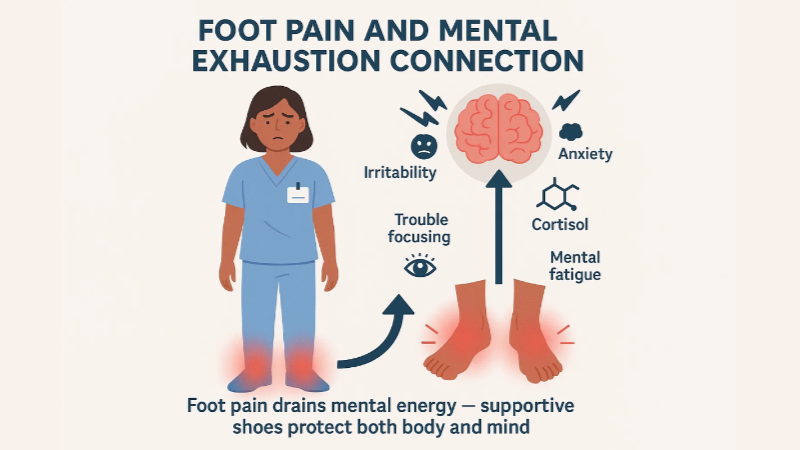
Instead, it’s stuck in “low battery mode”, running just enough to keep you going but with little left for focus, empathy, or problem-solving.
Over time, this relentless cycle can chip away at your emotional resilience. You might notice yourself becoming shorter with colleagues, feeling overwhelmed by routine tasks, or losing the motivation that once fueled your work. In nursing — a profession that demands both physical endurance and mental clarity.
That’s why the foot pain and mental exhaustion connection is so critical to address. Comfort isn’t about pampering yourself; it’s a survival tool for your career longevity.
When your feet are supported and pain-free, you’re not just standing taller physically — you’re standing stronger mentally.
4. Realize That Improper Footwear Increases Nurse Work Stress
Nursing already demands a constant mental balancing act — responding to call lights, charting in between rounds, monitoring patients, handling emergencies, and keeping up with the fast pace of the floor. But when your shoes are working against you, every task feels heavier.
Heel pain that flares up with each step, toe boxes that pinch and rub, or soles that fail to absorb impact don’t just cause physical discomfort — they become a constant mental distraction.
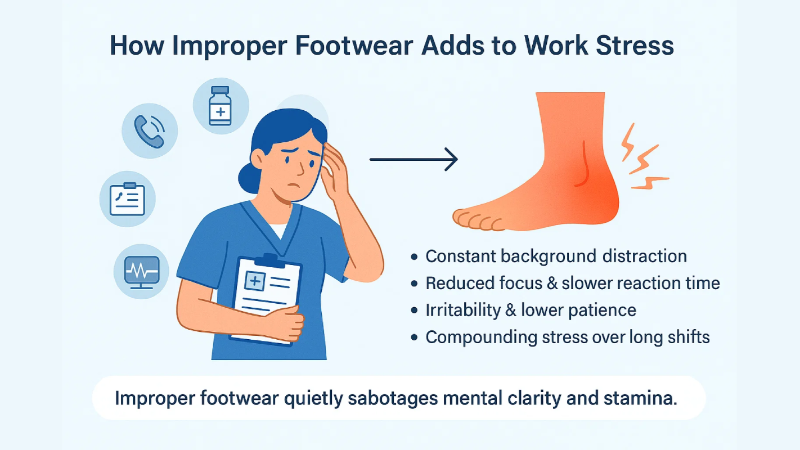
Instead of fully focusing on a patient’s condition or the details of a medication order, part of your brain is always whispering, “My feet are killing me.” That quiet background discomfort chips away at concentration, reaction time, and even your patience.
Long shifts mean long hours in your shoes. The effects compound over a long shift. By hour ten, you’re not just tired — you’re enduring a slow, persistent drain on your mental bandwidth.
You start counting the hours until you can peel off your shoes, or adjust your gait to compensate for pain, which can lead to hip, knee, or back strain. In other words, discomfort doesn’t stay isolated to your feet; it spreads to your overall stress load.
This is how improper footwear adds to work stress: by transforming each step into a reminder of pain, making your job feel harder than it already is. In a role where mental clarity and physical stamina are equally critical, the wrong shoes can quietly sabotage both.
5. Signs of Nurse Fatigue from Poor Footwear Support
Your body is always sending you signals — sometimes subtle, sometimes impossible to ignore — especially when your shoes aren’t giving you the support you need during those long nursing shifts. Here’s what to watch out for:
- Persistent soreness in your heels, arches, or toes by the end of each shift. It’s not just “normal tiredness.” When your shoes don’t properly cushion and support your feet, these aches become a daily routine rather than a rare occurrence.
- Feeling unusually drained or low on energy even after a full night’s rest. If you’re waking up tired and dragging through your day, bad footwear could be part of the problem. When your feet hurt, your entire body uses more energy just to stay upright and balanced.
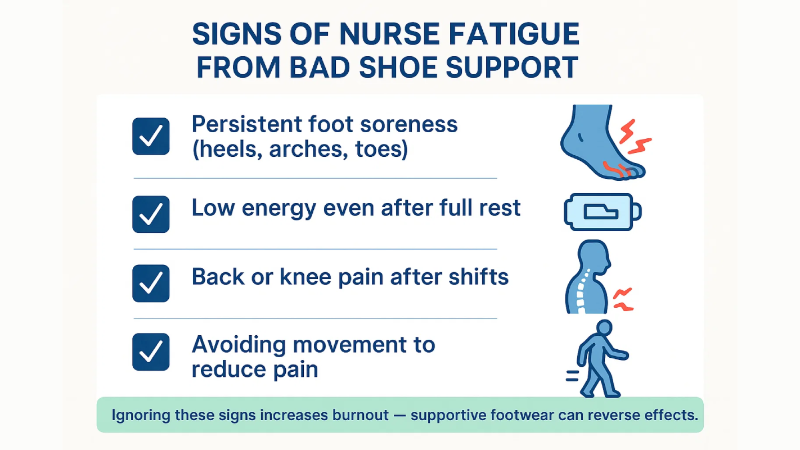
- Back or knee pain that worsens after a long day on your feet. Poor shoe support doesn’t just affect your feet—it changes how you walk, putting extra stress on your joints and muscles. Over time, this leads to discomfort that can linger well beyond your shift.
- Avoiding movement or skipping breaks to limit how much you have to walk or stand. When every step hurts, it’s tempting to minimize movement, but this can add to muscle stiffness and fatigue, creating a vicious cycle.
If any of these sound familiar, it’s a clear sign that nurse fatigue from bad shoe support is already impacting your health and performance. Ignoring these warnings only risks worsening discomfort and increasing burnout.
The good news? The right footwear can help reverse these effects, supporting both your body and your energy levels so you can focus on what truly matters—caring for your patients.
6. Comfort-Focused Footwear and Nurse Burnout Prevention
Choosing the right shoes isn’t just about foot comfort—it’s a powerful way to protect your overall well-being and reduce nurse burnout. When your shoes prioritize comfort, they help you maintain your endurance throughout those long, demanding shifts. Here’s what to look for in truly comfort-focused footwear:
- Cushioning that absorbs shock with every step:
Hospital floors are hard, and constant walking or standing can send repetitive impact through your feet and legs. High-quality cushioning softens each step, reducing joint strain and muscle fatigue.
- Arch support to keep your body aligned:
Proper arch support helps distribute your body weight evenly, preventing foot pain and improving your posture. When your feet are aligned, your knees, hips, and back feel less stressed, allowing you to move more comfortably and confidently.
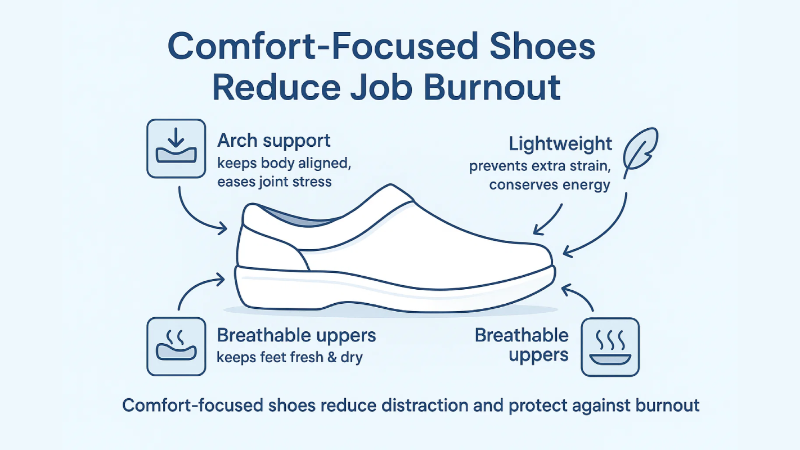
- Lightweight materials to prevent extra strain:
Heavy shoes can weigh you down, adding to your fatigue. Lightweight shoes reduce the effort needed to walk and stand, conserving your energy for what really matters—patient care.
- Breathable uppers to keep your feet fresh and dry:
Long shifts mean long hours in your shoes. Breathable materials help wick away moisture, prevent overheating, and reduce the risk of blisters and unpleasant odors.
Wearing comfort-focused shoes means you’re no longer distracted by pain or discomfort. Instead, you can focus your energy on your patients and tasks, which directly reduces job burnout. Investing in the right footwear is truly investing in yourself.
For expert recommendations on shoes that combine comfort, support, and durability, check out our Best Shoes for Nurses guide—it’s packed with top-rated picks designed with your needs in mind.
Recommended Shoes & Gear
If you want to make a shift-long difference, consider:
Product | |
Compression Socks | |
Anti Fatigue Nurse Shoes | |
Men's Custom Orthotics | |
Women's Custom Orthotics |
Conclusion
Your shoes are much more than just a piece of your uniform—they’re a vital part of your overall burnout prevention strategy. Wearing supportive, well-fitted, and comfort-focused footwear isn’t simply about avoiding foot pain; it’s about safeguarding your physical health and mental well-being so you can thrive in a demanding profession.
Remember, the right combination of proper support, a good fit, and high-quality materials creates a foundation for long-term comfort and career longevity.
For further tips on keeping your feet healthy and comfortable, be sure to explore our guides on How to Prevent Foot Pain From Standing All Day and Post-Shift Foot Massage Tips. Taking care of your feet is a powerful step toward preventing burnout and staying resilient in your nursing career.
FAQs on Footwear and Nurse Burnout
Can bad shoes really contribute to nurse burnout?
Yes—physical pain from poor shoes can trigger fatigue, stress, and emotional exhaustion.
What are the signs of fatigue caused by footwear?
Persistent soreness, reduced mobility, and low energy despite rest.
How do I choose shoes that reduce stress and pain?
Prioritize cushioning, arch support, and a proper fit—avoid overly stiff or tight shoes.
Are expensive nurse shoes worth it?
Absolutely—quality footwear lasts longer and saves you from injury and burnout.
How does foot pain affect mental health at work?
Chronic pain increases stress levels, reduces focus, and can lead to emotional exhaustion.
Leave a Reply