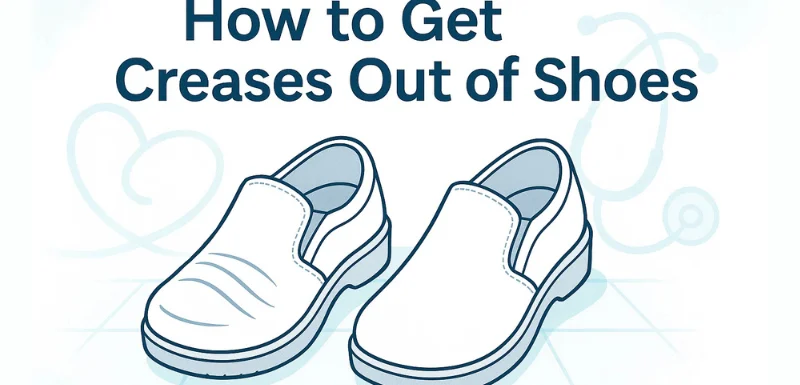
Keeping your shoes looking fresh isn’t just about cleaning them — it’s also about maintaining their shape. One of the biggest frustrations for nurses and healthcare workers is shoe creasing. After long shifts of walking, bending, and standing, those unsightly lines form across the toe box or sides.
If you’re wondering how to get creases out of shoes, don’t worry — there are quick fixes, prevention tips, and maintenance tricks that can restore your shoes to like-new condition.
What Causes Creases in Shoes?
Shoe creases are a normal part of wear and tear—every time your foot bends, the material follows. But while some creasing is unavoidable, the depth and speed at which it happens depend on how you wear, lace, and care for your shoes.
Think of creases as little “memory lines” your shoes develop, and with the right habits, you can control how noticeable they become.
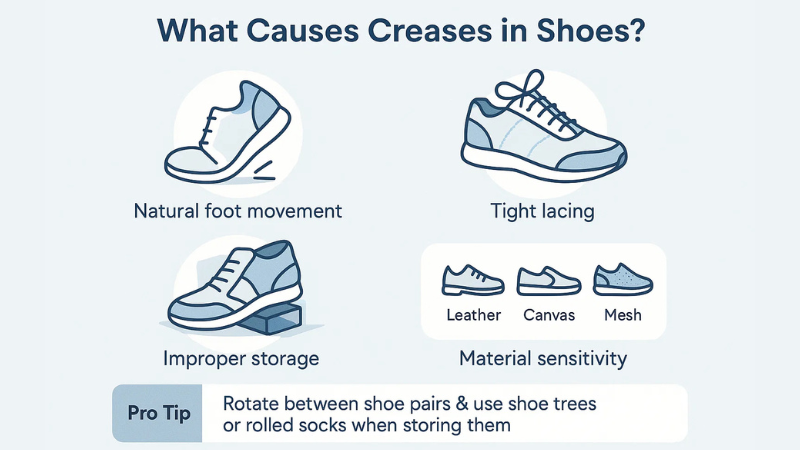
- Natural foot movement –
Every step forces the front of the shoe to bend, especially around the toe box. Softer materials like mesh or knit fabric bend more easily, which makes creasing more obvious.
- Tight lacing –
When shoes are tied too tightly, the upper material is pulled into rigid pressure points. This not only makes the shoe uncomfortable but also exaggerates deep wrinkles where the material bends most.
- Improper storage –
Throwing your shoes into a corner or stacking them under weight causes unnatural bends that “set” into the fabric or leather, speeding up visible creases.
- Material sensitivity –
Different materials react differently: leather creases more deeply but can be conditioned; canvas folds sharply; mesh shows lighter creases but wears out faster in the same spots.
Pro Tip: To minimize creases, rotate between shoe pairs and use shoe trees or rolled socks when storing them. This helps shoes keep their shape and prevents unnecessary folding.
Quick Methods to Get Creases Out of Shoes
Sometimes you don’t have the luxury of waiting days for creases to relax — maybe you’ve got an important shift, a presentation, or simply want your sneakers looking sharp before heading out. The good news is, there are a few quick, at-home methods that can smooth out shoe creases and restore their fresh look.
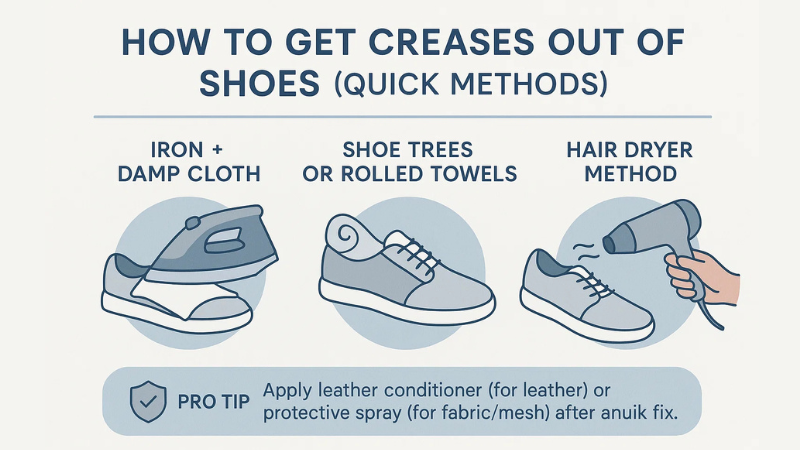
1. Iron + damp cloth
One of the oldest and most reliable tricks. Place a clean, damp cloth (like a washcloth or T-shirt) over the creased area, then lightly press with an iron on low heat for 5–10 seconds at a time. The steam softens the material while the pressure flattens the crease. Don’t overheat — leather and synthetics can scorch if the iron is too hot.
2. Shoe trees or rolled towels
If you don’t have a shoe tree, stuff the shoe with a rolled towel, T-shirt, or socks until it’s packed firmly. As the shoe sits, this pressure helps stretch the creased area back into its original shape. This works especially well if combined with gentle heat (like leaving the shoe in a warm but not hot room).
3. Hair Dryer method
Set a hairdryer to medium heat and wave it a few inches away from the creased spot while gently flexing the shoe with your hand or pressing it back into shape. The heat loosens the shoe’s fibers, allowing you to smooth out wrinkles without direct contact like an iron. Always keep the dryer moving so you don’t over-dry or damage the material.
Pro Tip: After using any of these quick fixes, apply a leather conditioner (for leather shoes) or a protective spray (for fabric/mesh shoes). This not only keeps the shoe material flexible but also helps prevent new creases from forming too quickly.
How to Get Deep Creases Out of Shoes
When shoes develop deep, set-in creases, they can make even newer pairs look old and worn out. These stubborn wrinkles usually form after repeated bending, improper storage, or long hours of wear without support.
While quick fixes can handle surface lines, deeper creases require more advanced care and patience to restore the shoe’s original shape. Here’s how to tackle them effectively:
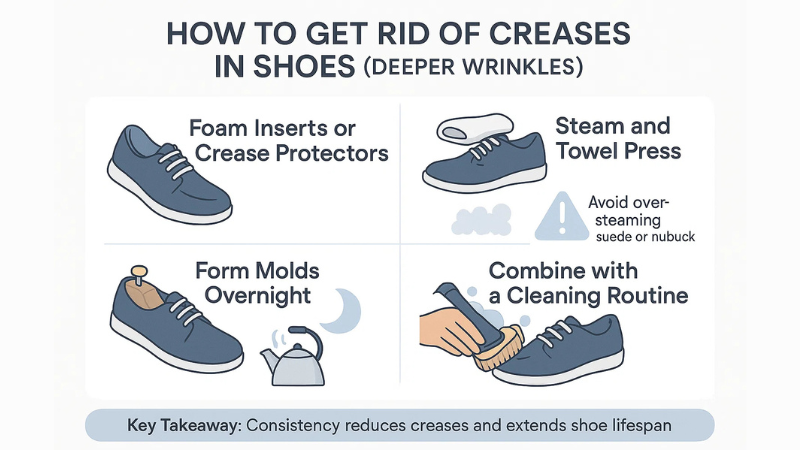
1. Foam Inserts or Crease Protectors
Specially designed crease protectors, often made of foam or plastic, fit snugly inside the toe box of your shoes. They push outward against the upper, reducing visible wrinkles and preventing new ones from forming.
Unlike stuffing shoes with socks or paper, these are shaped to match natural foot curves—making them particularly useful for sneakers and work shoes.
2. Steam and Towel Press
Steam works wonders because heat and moisture relax shoe fibers, especially leather and synthetic blends. Hold your shoe above light steam (like from a kettle or garment steamer) for a few seconds, then immediately press the crease with a warm, slightly damp towel.
This combination loosens the fibers and flattens stubborn lines without direct heat damage.
⚠️ Pro Tip: Don’t over-steam suede or nubuck, as moisture can leave watermarks.
3. Form Molds Overnight
Deep creases often need time to reset. Insert shoe trees, rolled towels, or dedicated molds to reshape the shoe from the inside. Leaving them overnight—or even for several days—gradually stretches out the wrinkled areas. This method is slow but one of the safest for delicate materials like canvas, mesh, and even high-end leather.
4. Combine with a Cleaning Routine
Older pairs with deep creases often have dirt, sweat, and odor trapped in the material as well. Pairing crease-removal methods with a full shoe cleaning session can bring the shoe back to life both in appearance and comfort.
✅ Key Takeaway: Deep creases won’t disappear instantly, but with consistent use of inserts, heat-steam methods, and proper storage, you can dramatically reduce their appearance while extending the lifespan of your shoes.
How to Get Creases Out of Shoes of Different Materials
Not all shoes are created equal, and neither are their care methods. The material of your shoe plays a huge role in how you should remove wrinkles.
Using the wrong approach can cause permanent damage—like cracked leather, warped mesh, or melted synthetics. Below is a breakdown of the safest, most effective techniques based on shoe type:
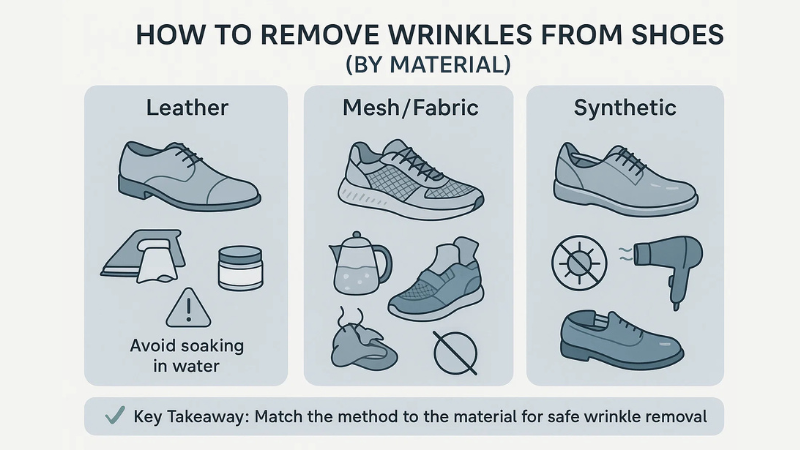
1. Leather Shoes
Leather is durable yet sensitive to moisture and heat. To smooth wrinkles:
- Place a damp (not wet) cloth over the creased area.
- Gently press with an iron on low heat for just a few seconds at a time.
- After removing wrinkles, condition the leather with a quality cream or polish to restore its softness and prevent cracking.
⚠️ Avoid soaking leather in water, as this can stiffen and warp the material.
2. Mesh or Fabric Shoes
Mesh and fabric are lightweight and flexible, which makes them prone to wrinkling but also easier to reshape:
- Hold the shoe over light steam (from a kettle or garment steamer) to relax the fibers.
- Stuff the shoe with socks, rolled towels, or crumpled paper to help it hold its shape as it dries.
- Always air dry in a cool, shaded area—direct sunlight can cause fading or shrinkage.
3. Synthetic Materials (PU, faux leather, etc.)
Synthetic shoes are less breathable and can be very sensitive to heat, meaning traditional ironing methods are risky:
- Use shoe trees, foam inserts, or rolled towels to gradually push out wrinkles.
- For stubborn creases, a hairdryer on low heat held at a distance can help, but move it constantly to avoid melting or warping the surface.
✅ Key Takeaway: Tailor your crease-removal method to your shoe’s material. Leather benefits from gentle heat and conditioning, mesh thrives with steaming and stuffing, while synthetics respond best to gradual reshaping. This ensures wrinkle removal without compromising the shoe’s lifespan.
How to Prevent Shoe Creasing
Creases are easier to prevent than to fix. By adopting a few smart habits, you can keep your shoes looking newer for longer and save yourself the hassle of ironing or reshaping them later. Here are the best prevention methods every professional on their feet should know:
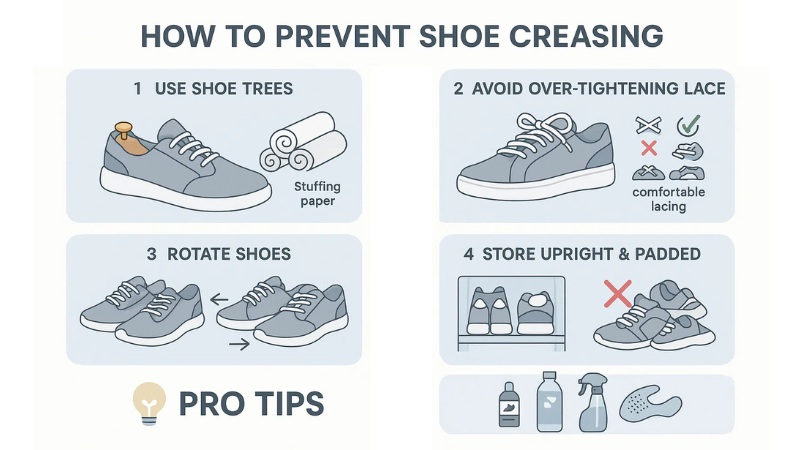
1. Always Use Shoe Trees After Long Shifts
Shoe trees aren’t just for dress shoes—they work wonders for sneakers and work shoes too. By filling the shoe and holding its natural shape, they prevent the upper material from collapsing and forming wrinkles. For budget-friendly alternatives, rolled towels or crumpled paper can also do the trick.
2. Avoid Over-Tightening Laces
When sneakers or work shoes are tied too tightly, they create concentrated pressure points across the upper. This not only deepens creases but can also make shoes uncomfortable. Lace snugly for support, but leave a little room for natural movement.
3. Rotate Shoes Daily
Wearing the same pair every single day accelerates both wear and creasing. By rotating between two or more pairs, you give each pair time to air out and recover its shape, which significantly extends their lifespan.
4. Store Shoes Upright and Padded
Shoes tossed in a corner or stacked in a pile lose their shape quickly but if you want, you can make them last longer. Instead, store them upright with padding inside—whether that’s a shoe tree, paper stuffing, or foam inserts. This reduces collapse and helps maintain a crease-free silhouette.
Pro Tips for Long-Term Prevention:
- Apply a leather conditioner (for leather shoes) or a protective spray (for fabric/mesh shoes) to keep materials supple and less prone to deep wrinkles.
- Use sneaker shields or anti-crease inserts inside the toe box for sneakers if you’re especially worried about creasing.
- Remember the golden rule: a little care after each shift prevents a lot of fixing later.
How to Get Creases Out of Sneakers
Sneakers are designed for comfort and flexibility, but that same flexibility is exactly what makes them prone to creasing—especially across the toe box where your foot bends naturally with every step.
If you wear sneakers daily for work or long shifts, those wrinkles can start to make them look worn out much faster than they actually are. Fortunately, there are several reliable ways to fix sneaker creases and restore their clean, structured look.
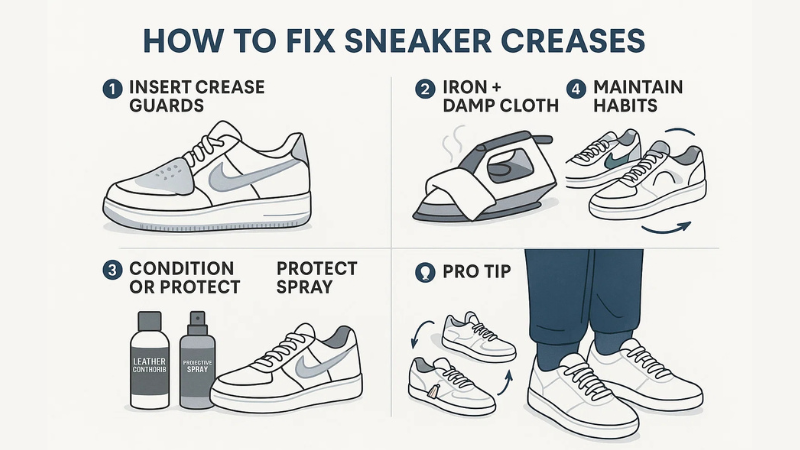
1. Insert Sneaker Crease Guards Before Wearing
Crease guards (also called sneaker shields or toe box protectors) are inserts that slip inside the front of your sneakers. They provide a firm layer of resistance against bending, which reduces new creases and helps smooth out existing ones over time.
If you wear sneakers as your go-to work shoes, adding crease guards is one of the easiest ways to extend their lifespan.
2. Use the Iron + Damp Cloth Method for Stubborn Creases
For sneakers that already have deep set lines, heat treatment works best. Place a clean, damp cloth over the crease and press with a warm iron for 5–10 seconds at a time.
The steam helps relax the sneaker’s fibers while the cloth protects the surface from direct heat damage. Always work slowly and check frequently—too much heat can warp synthetic materials.
3. Condition or Polish Sneakers with Proper Care Products
After fixing creases, conditioning is key. Leather sneakers benefit from a leather conditioner that keeps the material supple and less likely to crack in the future.
For mesh or fabric sneakers, a protective spray helps maintain flexibility while keeping dirt and moisture from settling in. Think of it as giving your shoes a protective shield after every repair.
4. Maintain with Preventive Habits
If sneakers are your daily go-to, try alternating pairs when possible to reduce constant pressure on one set. Store them with shoe trees or rolled towels inside to maintain shape after each use. A little maintenance after work pays off big in keeping sneakers crease-free and professional-looking.
Pro Tip: If you’re in a profession where sneakers double as part of your work uniform, learning how to fix sneaker creases isn’t just about aesthetics—it’s also about presenting a neat, professional image without needing to replace shoes too often.
How to Make Shoes Look New Again
Shoes may lose their shine, shape, and crispness with daily wear, but that doesn’t mean they’re past saving. With the right combination of cleaning, reshaping, and protection techniques, you can restore them to a nearly fresh-out-of-the-box look.
Whether it’s sneakers, leather shoes, or work shoes that see long shifts, these methods work across most materials when done carefully.
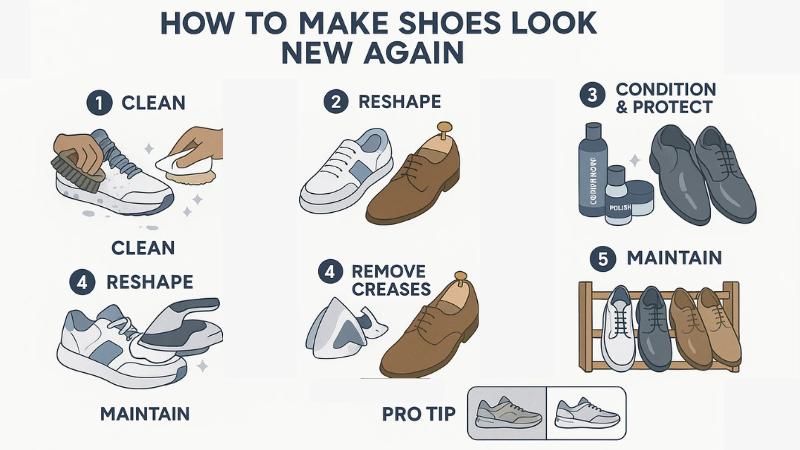
1. Clean Regularly with Gentle Solutions
Dirt, stains, and scuffs are the first things that make shoes look old. Start by giving them a good clean tailored to the material:
- For sneakers and fabric shoes: Use a paste of baking soda and water or a mild detergent. Scrub gently with a soft brush.
- For leather shoes: Wipe with a damp cloth, then follow with leather cleaner or saddle soap.
- For suede/nubuck shoes: Use a suede brush or eraser to lift stains without water.
Regular cleaning prevents buildup that can permanently dull the shoe’s surface.
2. Use Reshaping Techniques Like Shoe Trees
Shoes often lose their structure as they bend and crease. Inserting shoe trees (or even rolled towels or paper) inside after every wear helps restore their shape, smooth out wrinkles, and prevent sagging. This is especially important for leather and canvas shoes, which are more prone to collapsing in the toe and heel areas.
3. Apply Conditioners, Sprays, or Protectants Based on Material
Once shoes are clean and reshaped, give them some TLC with the right products:
- Leather: Use a leather conditioner followed by polish to restore natural oils, prevent cracking, and revive shine.
- Fabric/mesh shoes: Apply a protective spray to repel dirt and water while maintaining breathability.
- Suede/nubuck: Use a suede protector spray to guard against future stains and keep the nap (texture) looking soft.
4. Pair Cleaning with Crease Removal
Creases and wrinkles are often what make shoes look worn out—even if they’re clean. Combine your cleaning with crease removal methods like the iron + damp cloth technique for sneakers, or stuffing with shoe trees for fabric and leather shoes. Together, these steps instantly refresh their appearance.
5. Maintain with Regular Upkeep
Bringing shoes back to life isn’t a one-time fix. With weekly cleaning, proper storage, and protective sprays, your shoes won’t just look new again—they’ll stay looking new. Think of it like skincare for your shoes: prevention is always easier than fixing damage later.
Pro Tip: If you’re trying to revive older shoes, take before-and-after photos. You’ll be surprised how much difference simple cleaning and reshaping can make, especially when paired with conditioners or protectants.
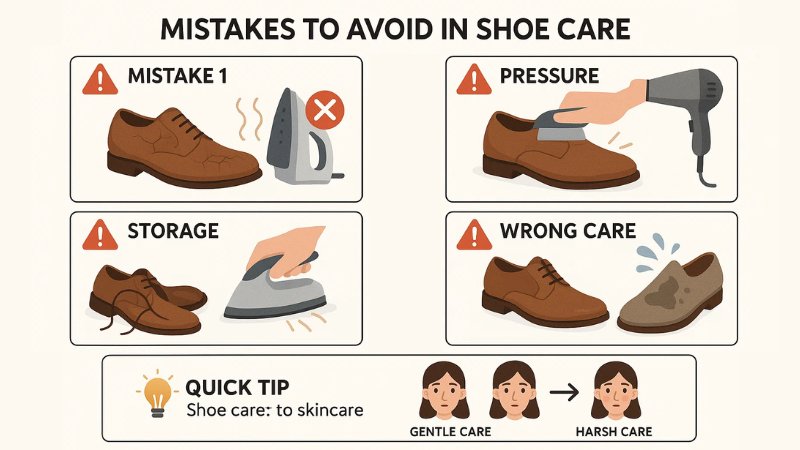
Mistakes to Avoid When Getting Creases Out of Shoes
While restoring and reshaping shoes is effective, a few common mistakes can actually damage your footwear permanently if you’re not careful. Here’s what you should steer clear of:
1. Applying Direct High Heat to Leather or Synthetics
It may be tempting to use a hot iron, blow dryer, or heat gun to smooth out wrinkles quickly, but direct heat can burn, crack, or warp the material. Leather dries out and becomes brittle, while synthetic shoes can melt or lose shape. Always use a protective barrier like a damp cloth, and keep heat settings low and controlled.
2. Pressing Too Hard or Rushing the Process
Shoes need a gentle touch. Pressing down too firmly while ironing or scrubbing can leave permanent dents, warped surfaces, or uneven textures. Take your time, use light pressure, and repeat the process gradually rather than forcing results in one go.
3. Storing Shoes Without Inserts After Reshaping
Once you’ve taken the time to reshape your shoes, don’t undo your hard work by tossing them in a corner. Shoes that aren’t stored with shoe trees, rolled towels, or paper stuffing will quickly crease again. Proper storage helps maintain structure and extends the results of your effort.
4. Ignoring Material-Specific Care
Not all shoes are made equal—suede, leather, mesh, and synthetics all react differently. Using the wrong method (like applying water to suede or too much paste on mesh) can make them look worse instead of better. Always double-check the right cleaning and reshaping approach for your shoe type.
Quick Tip: Think of shoe care like skincare—gentle, consistent treatment works best. Harsh methods may give temporary results but can shorten the life of your shoes dramatically.
Recommended Products (Affiliate Picks)
Products | |
Sneaker Crease Protector | |
Leather Shoe Conditioner and Polish | |
Wooden Shoe Tree | |
Plastic Shoe Tree |
Conclusion
Creases are a natural part of wearing shoes, especially if you use them daily, but they don’t have to make your footwear look old or unprofessional.
Whether it’s quick fixes like steaming, stuffing, or using crease guards or more advanced methods such as foam inserts, low-heat pressing, or reshaping molds—you can restore your shoes’ original form and extend their lifespan.
Remember, each material—leather, mesh, fabric, or synthetic—requires its own careful approach. Treating all shoes the same way can backfire and even shorten their life. That’s why understanding material-specific care is key.
In short, while you can’t completely avoid creases, you can absolutely control how they affect your shoes. With patience, the right tools, and good maintenance habits, your footwear will continue to look sharp, polished, and professional—no matter how often you wear them.
FAQs: Get Creases Out of Shoes
What’s the safest way to get rid of creases in leather shoes?
Use a damp cloth and iron on low heat with light pressure.
Can I iron shoes to remove creases?
Yes, but always use a protective cloth and avoid direct contact.
How do I stop my shoes from creasing when I walk?
Use crease protectors and rotate between pairs.
Do crease protectors really work?
Yes — they reduce bending and extend shoe life.
How do I make my worn shoes look new again?
Combine crease removal with cleaning and proper storage
Leave a Reply