
Ever had that mini-heart attack moment where your foot slides on a freshly polished hospital floor? Yeah… not fun. For nurses and healthcare workers, slippery shoes aren’t just annoying — they’re dangerous.
Shoes can lose grip for a lot of reasons: worn-out soles, leather bottoms, or just the reality of working on smooth, always-cleaned floors. But here’s the good part — you don’t have to toss your favorite pair just yet.
In this guide, I’ll show you nurse-tested ways to make shoes less slippery, from quick DIY fixes you can do before your next shift to long-term solutions that’ll keep you steady for months.
Why Shoe Grip Matters in Healthcare Settings
If you’ve ever been carrying a tray of meds and suddenly felt your foot slip out from under you, you know that heart-stopping moment all too well. Hospitals pride themselves on spotless floors—but that glossy shine? It can be as slick as an ice rink.
Now, mix that with 12-hour shifts, constant back-and-forth movement, and quick pivots around tight corners, and you’ve got the perfect recipe for a slip, no matter what shoes you use. Unless your shoes are working as hard as you are.
Here’s why traction isn’t just a “nice-to-have” in healthcare—it’s essential:
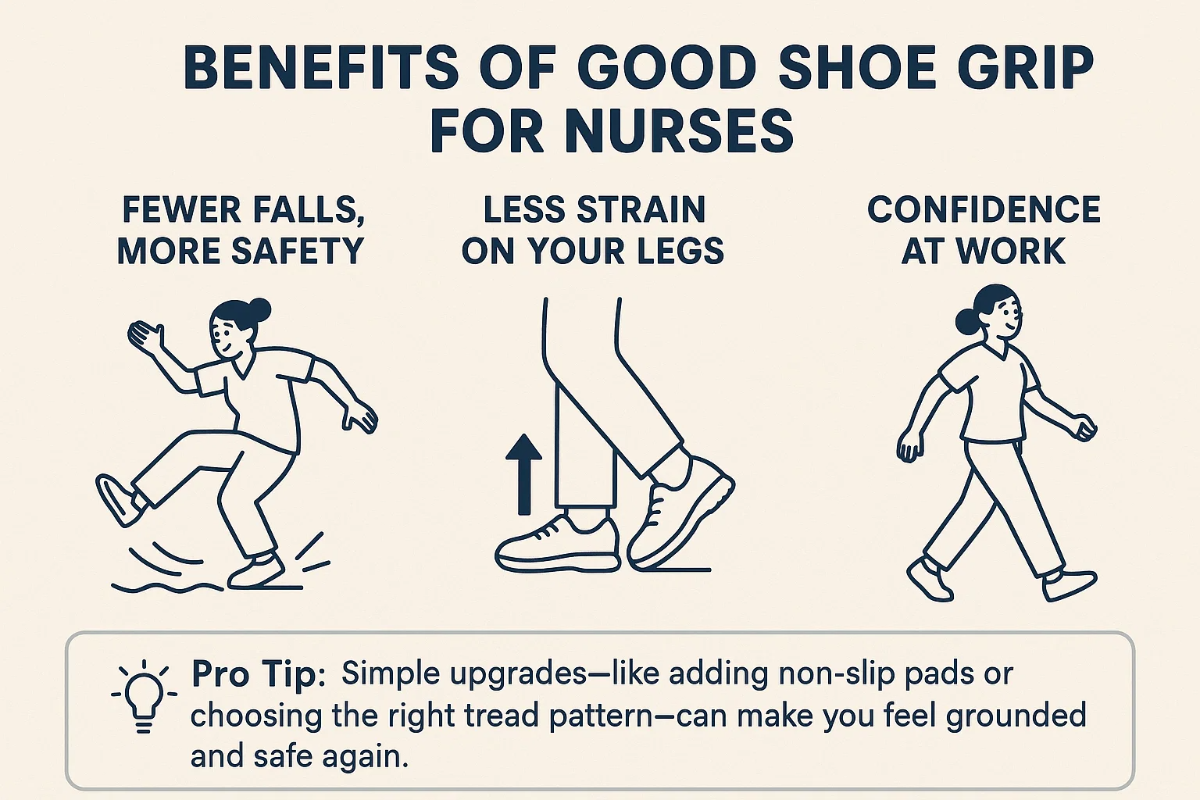
- Fewer falls, more safety: You can’t take care of your patients if you’re sidelined with a twisted ankle.
- Less strain on your legs: Good grip means your body doesn’t waste extra energy stabilizing every step.
- Confidence at work: Walk like a pro, not like you’re cautiously ice-skating down the hallway.
Confused which shoes should you choose? Don’t worry, check out the best shoes for nurses for the top picks of work shoes
Pro Tip: If you’ve been wondering how to reduce shoe slide on hospital floors, the answer isn’t just “buy better shoes.” Simple upgrades—like adding non-slip pads or choosing the right tread pattern—can make you feel grounded (literally) and safe again.
Quick Fixes: DIY Ways to Make Shoes Less Slippery
So, your shift is starting soon, the floors are polished like a skating rink, and your shoes feel like they’re auditioning for Dancing on Ice. Don’t panic—there are a few quick, do-it-yourself grip boosters you can try right at home or even in the break room before you clock in. Find more DIY fixes to make your shoes less slippery.
1. Sandpaper Scuff
This is one of the easiest and most effective tricks.
- What you’ll need: A medium-grit sandpaper sheet (around 60–80 grit works best).
- How to do it: Flip your shoes over and gently rub the sandpaper across the smoothest parts of the sole. Focus on the forefoot and heel—these are your main contact points with the floor.
- Why it works: Those tiny grooves and scratches give your shoes more “bite” against slippery surfaces, just like tire tread on a wet road.
- Extra tip: Don’t overdo it. A light scuffing is enough—you want texture, not damage.
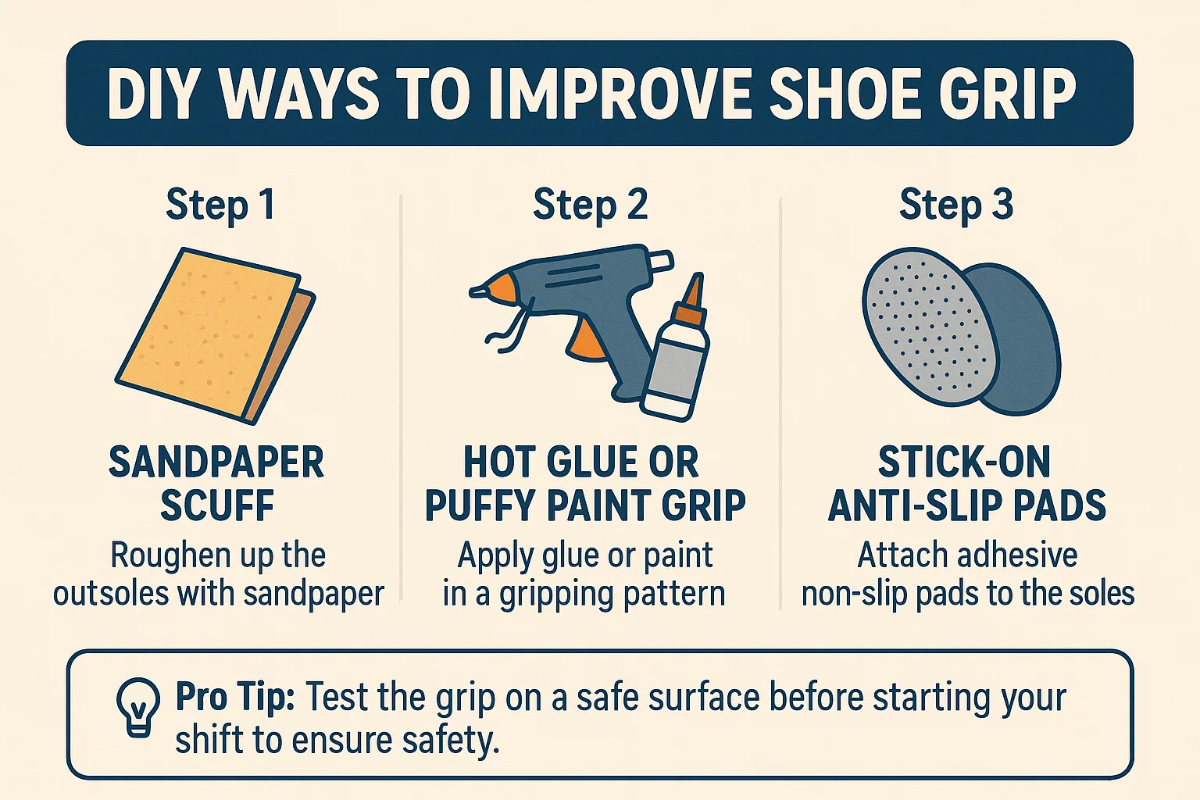
2. Hot Glue or Puffy Paint Grip
Perfect if you have craft supplies lying around (or a helpful colleague with a glue gun).
- What you’ll need: A hot glue gun or a bottle of puffy paint.
- How to do it: Draw thin zig-zag or wave patterns on the soles. You can also make small dots for extra traction. Let them dry completely before wearing—about 20–30 minutes for glue, a bit longer for paint.
- Why it works: The dried glue or paint creates a raised texture, similar to shoe tread, that grips the floor better.
- Extra tip: Clear glue is discreet, while colored puffy paint lets you add a little personality (nobody will see it, but you’ll know it’s there).
3. Stick-On Anti-Slip Pads
The fastest fix if you’re short on time.
- What you’ll need: Pre-cut adhesive anti-slip shoe pads (available online, at drugstores, or even some dollar stores).
- How to do it: Peel off the backing, press the pad firmly onto the sole, and you’re ready to go.
- Why it works: These pads use grippy rubber or textured fabric to prevent slips, without altering the shoe permanently.
Pro Tip: Whichever method you choose, always test it before starting your shift. Walk on a safe, dry surface first to make sure the grip feels secure and natural. The last thing you want is your shoes sticking so much you trip over your own feet!
Also, you can keep a spare pair in your work bag—they’re small, light, and perfect for emergency grip repairs mid-shift.
Household Hacks to Make Shoes Less Slippery
Sometimes, the best solutions are sitting right in your kitchen drawer or bathroom cabinet. You don’t always need fancy shoe accessories to stop slipping—a little creativity can save the day. Here are some surprisingly effective grip-boosting tricks you can try with things you probably already own.
1. Rubber Bands for Instant Traction
- What you’ll need: Two thick rubber bands (the kind that come on produce bundles are perfect).
- How to do it: Stretch one band around the front of your shoe and one around the back, positioning them across the widest part of the sole.
- Why it works: The rubber creates friction every time your foot strikes the ground, helping prevent those “ice rink” moments on polished floors.
- Best for: Quick fixes before heading out the door, or when you’re on a shift and can’t get to proper anti-slip pads.
- Heads-up: It’s not the prettiest look, but in a pinch, function beats fashion—especially if it keeps you upright.
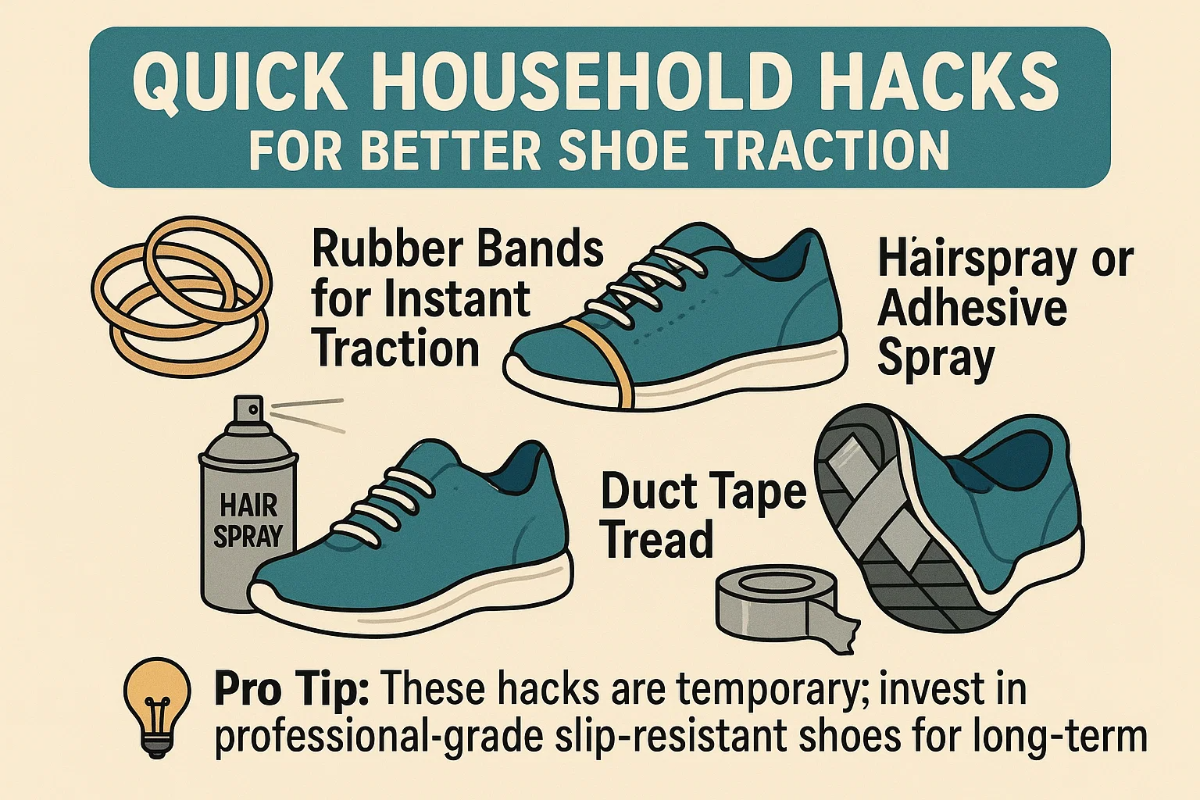
2. Hairspray or Adhesive Spray for a Sticky Boost
- What you’ll need: A can of hairspray (extra hold works best) or any spray adhesive.
- How to do it: Hold your shoes upside down and spray a light, even coat across the soles. Let it sit for about a minute before walking.
- Why it works: The spray leaves a slightly tacky residue that increases grip on smooth surfaces.
- Best for: Short shifts or quick errands—the effect usually wears off in a few hours.
- Pro tip: Keep a travel-size hairspray in your locker or bag for mid-shift touch-ups.
3. Duct Tape Tread for Emergency Grip
- What you’ll need: Standard duct tape and scissors.
- How to do it: Cut several strips and apply them in a criss-cross pattern on your soles, pressing firmly to make sure they stick.
- Why it works: The textured surface of duct tape adds just enough friction to keep you steady, even on slick tiles.
- Best for: Emergency situations when you have no other options.
- Fun fact: If you’ve ever spotted an ER nurse with duct tape on their shoes, now you know their secret—they’re not starting a trend, they’re staying safe.
Pro Tip: These hacks are temporary. If you find yourself relying on them often, it’s worth investing in shoes designed with professional-grade slip resistance.
Long-Term Solutions for Nurses to Make Shoes Less Slippery
If you’re done with quick fixes and want a lasting solution that gives you peace of mind every step of your shift, investing in proper traction is the way to go. After all, your shoes are your daily work companions—why not treat them (and yourself) right?
1. Slip-Resistant Shoes Made for the Job
Certain shoe brands know exactly what nurses need. Brands like Dansko, Crocs Work, Skechers Work, and others specialize in footwear designed specifically for slick hospital floors.
- What makes them special? Their soles have textured rubber compounds that grip polished tiles, reducing slip risk dramatically.
- Investing in these means: You get peace of mind, fewer foot and leg aches, and a boost in confidence walking from room to room.
Bonus: Many also offer extra comfort features like cushioned insoles and arch support—perfect for those marathon 12-hour shifts.
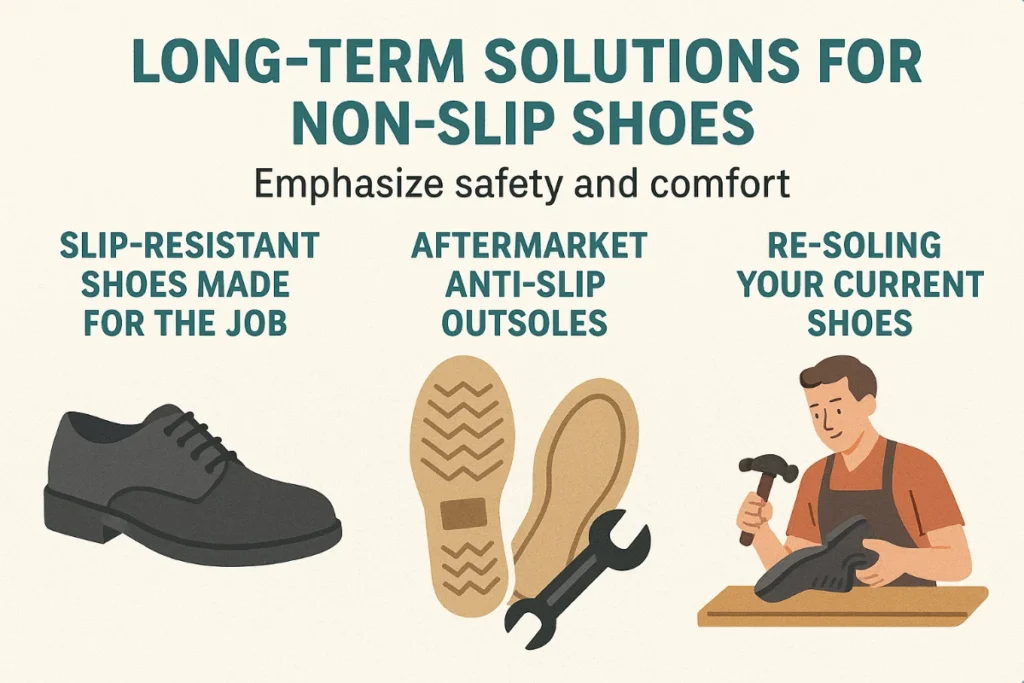
2. Aftermarket Anti-Slip Outsoles: A Pro-Level Upgrade
If you already have a pair of shoes you love but worry about slipping, shoe repair shops can add aftermarket anti-slip soles for you.
- These are professional-grade rubber or TPU soles made specifically to increase traction.
- A great way to combine your favorite footwear with hospital-ready safety.
- Why consider this? It’s often cheaper than buying new shoes and lets you keep the fit and style you’re comfortable with.
3. Re-Soling Your Current Shoes
If the upper part of your shoe is still in great shape but the sole is worn down, resoling is like hitting the refresh button.
- A cobbler can replace the entire sole with a fresh, slip-resistant one.
- This extends the life of your shoes without sacrificing comfort or style.
- Plus, it’s environmentally friendly—less waste, more use.
Think of it this way: Just like you’d upgrade your phone’s software for better performance, upgrading your shoe soles gives your favorite kicks a safety boost that lasts. It’s an investment in your comfort, your safety, and your ability to keep doing your best work without worrying about slips and falls.
Special Tips for Leather or Smooth Outsoles
Leather soles can look incredibly stylish and polished, but let’s be honest— no matter how perfect leather shoes you have, on shiny hospital floors, they can turn your walk into an unintended ice-skating routine. If you love the look of leather but want to stay safe and steady during your shift, here’s how you can boost grip without sacrificing style.
1. Grip-Enhancing Sprays
These sprays are a nurse’s secret weapon for slick soles.
- They create an almost invisible, textured coating on your shoe’s outsole that increases friction with the floor.
- Easy to apply and usually dry quickly, so you can keep wearing your favorite leather shoes with confidence.
Just remember, sprays may need to be reapplied regularly, especially with frequent wear.
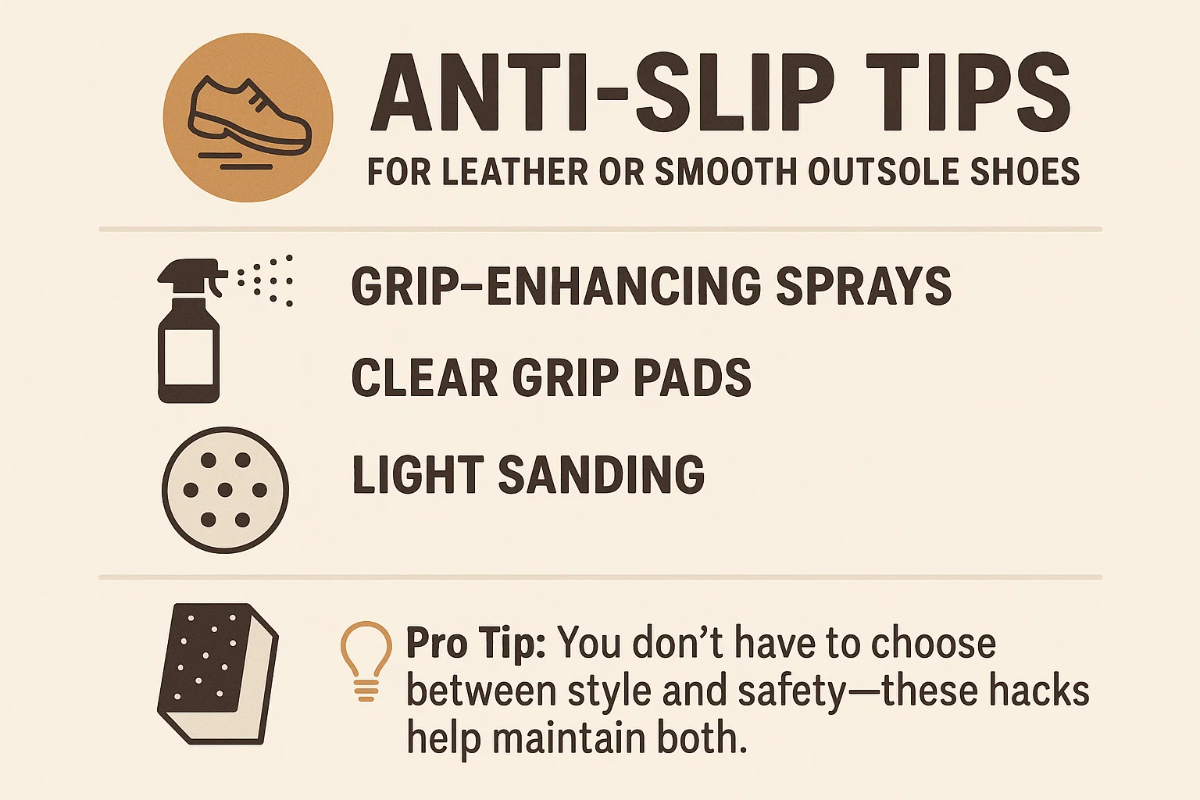
2. Clear Grip Pads
If you want a more permanent and discreet solution, clear grip pads are a fantastic option.
- These thin, transparent pads stick directly onto your soles and add traction without changing the shoe’s appearance.
- They’re perfect for nurses who need that polished, professional look but can’t afford to slip.
- Many are easy to trim and apply yourself—no special tools needed.
3. Light Sanding
Want a simple DIY hack? Lightly sanding the soles can do wonders.
- Using fine-grit sandpaper, gently roughen the surface—just enough to add texture, not enough to damage the leather.
- This creates tiny grooves that grip better on slippery surfaces.
- Be cautious: too much sanding can ruin the sole, so take it slow.
You don’t have to choose between style and safety—these anti-slip hacks for leather outsoles help you have both. Ready to step confidently in your classy shoes without the fear of slipping? These tips are your go-to!
What to Avoid When You Decide to Make Your Shoes Less Slippery
When it comes to tackling slippery shoes, it’s tempting to try anything and everything. But not all fixes are created equal—and some can actually make your problem worse or damage your shoes in the long run. So, before you start experimenting, here are some important things to steer clear of:
1. Oils and Conditioners
You might think moisturizing your leather shoes is a good idea—and it usually is for keeping them soft and shiny. But here’s the catch:
- Oils and conditioners make the soles slicker, not grippier.
- Applying them to the bottom of your shoes is like trying to walk on ice with wet socks—just asking for a slip.
So, keep those products strictly for the uppers and away from the soles.
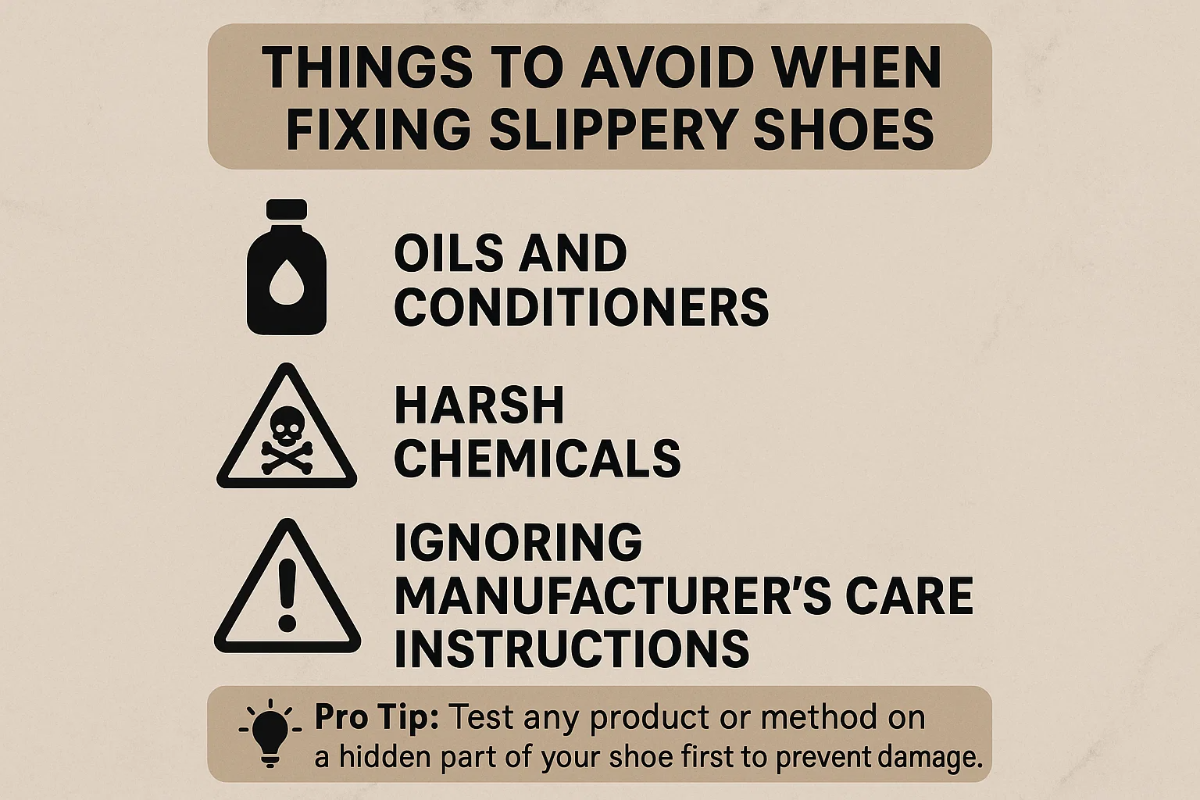
2. Harsh Chemicals
Avoid harsh chemicals or strong solvents in your quest for better traction.
- These can weaken or degrade the sole material, causing cracks or premature wear.
- Chemicals might also eat away at any protective coatings, leaving your shoes even more vulnerable to damage.
- Stick to gentle, shoe-safe products whenever possible.
3. Ignoring Manufacturer’s Care Instructions
Every shoe comes with care guidelines for a reason—don’t ignore them!
Some fixes can void your shoe’s warranty or shorten its lifespan if they contradict the brand’s recommendations.
- Always check your shoe’s care label or the manufacturer’s website before trying a new method.
- If in doubt, ask a professional cobbler for advice—sometimes it pays to get expert help.
Pro Tip: If you’re ever unsure about a product or method, test it on a small, hidden part of your shoe first. That way, you won’t risk ruining your entire pair.
Remember, fixing slippery shoes is about smart solutions—not quick, risky shortcuts. Avoid these pitfalls and you’ll keep your shoes safe, functional, and looking great for longer.
Recommended Anti-Slip Products
Here are some nurse-approved products you can try:
Products | |
Non Slip Sole Pads | |
Grip Enhancing Sprays |
Conclusion
Slips aren’t just embarrassing — in a fast-paced hospital environment, they can be downright dangerous. But here’s the good news: with a few smart, simple fixes, you can make your shoes less slippery and regain your confidence on those shiny floors.
Regularly check your soles, tackle any traction issues early, and you’ll avoid the dreaded “oops-I-almost-fell” dance during your shifts. After all, your focus should be on caring for patients — not on keeping your balance!
Stay safe, stay steady, and keep moving with confidence.
FAQs
How can I make my nursing shoes more slip-resistant?
Start with stick-on pads or sole sanding, and consider professional slip-resistant outsoles. Learn more about how to make shoes less slippery.
What’s the safest DIY method?
Sandpaper and grip pads are quick, effective, and won’t damage your shoes.
Are anti-slip sprays okay for leather shoes?
Yes — just choose one labeled leather-safe and test a small area first.
Can I make shoes permanently slip-resistant?
Yes, professional resoling can last as long as the shoe itself.
Why do shoes get slippery over time?
Tread wears down, and cleaning chemicals can erode grip.
Leave a Reply