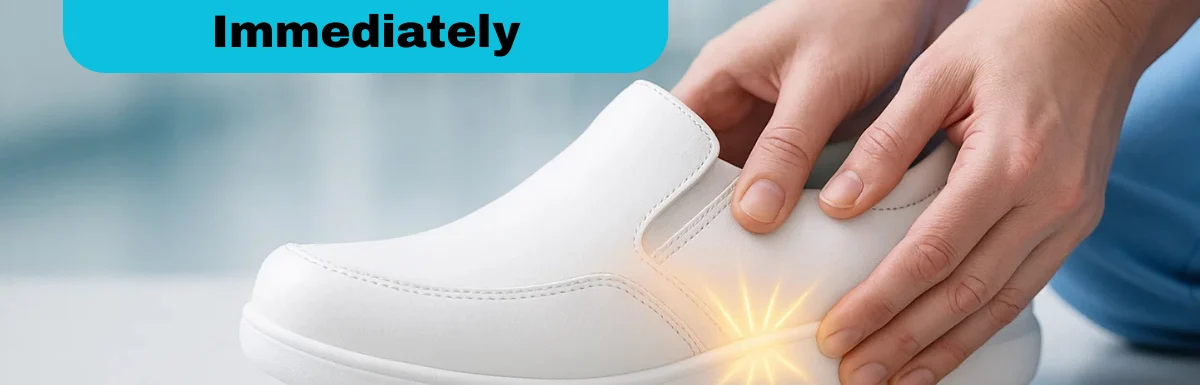
If you’re a nurse or healthcare worker, you know the feeling—hour after hour on your feet, rushing from one patient to the next, barely stopping to breathe, let alone sit down. In a job where every step matters, keeping your shoes clean isn’t enough.
Even the smallest discomfort can feel like a big problem. And nothing ruins a shift faster than shoes that are just a little too tight. In such times, knowing how to stretch shoes immediately can really save the day.
That subtle pinch at the toes, the pressure around the sides, or the stiff material digging into your heels doesn’t just cause irritation—it can quickly turn into blisters, swelling, and aching feet that follow you home. The result? More fatigue, less focus, and an even harder day tomorrow.
That’s why knowing a few quick, effective ways to stretch shoes immediately—right when you need it—is a lifesaver. A little shoe-adjusting know-how can mean the difference between a painful.
Why Stretching Shoes Immediately Is Crucial for Nurses
New shoes may look perfect, but without a proper fit from day one, they can quickly become a source of pain rather than support. Breaking in footwear naturally takes days or even weeks — but during back-to-back 12-hour shifts, that’s a luxury most nurses simply don’t have.
When shoes are too tight, they put constant pressure on the toes, sides of the feet, and the instep. This pressure can lead to painful blisters, corns, swelling, and muscle cramping. Worse, continued strain can affect posture and cause lasting foot problems.
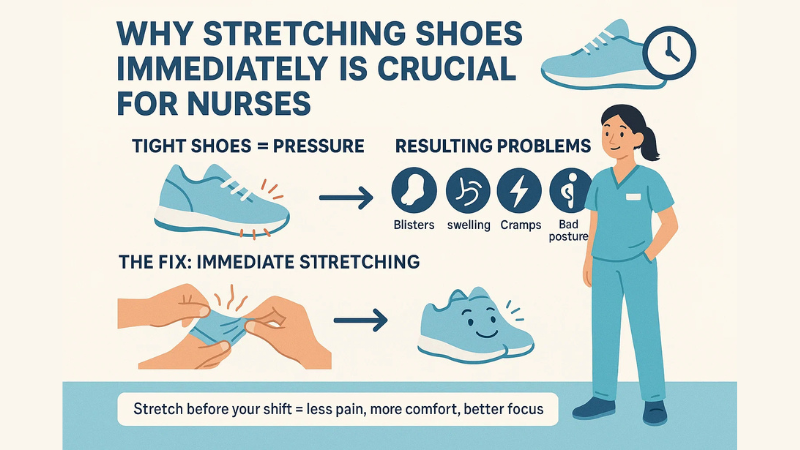
That’s why immediate shoe stretching techniques are a game-changer. By loosening tight spots before your first shift, you give your feet the room they need to move comfortably, reducing friction and preventing injury.
1. How to Stretch Shoes Immediately: Quick Methods
If your shoes feel painfully tight and you need instant comfort—whether before heading out or even during a shift—here are some quick tricks that actually work.
Thick Socks Method (Quick Warm-Up Stretch)
- Put on your thickest pair of socks (or wear two layers if you can).
- Slip your feet into the shoes and walk around the house for 10–15 minutes.
- Flex your toes, bend your feet, and move as much as possible—this helps loosen the material.
Tip: If the shoes are extra stubborn, use a hair dryer on the tight spots for 20–30 seconds while moving your feet. The heat makes the material more flexible.
Best for: Leather, synthetic, or canvas shoes that just need a little give.
Hand-Stretching (Targeted Spot Relief)
- Take the shoe in your hands and gently bend, twist, and pull on the tight areas.
- For toe boxes, press outward from inside with your fist or a round object (like a rolling pin end).
- Move slowly but firmly—don’t yank, as this can damage the stitching.
Best for: Quick fixes when only one area feels tight.
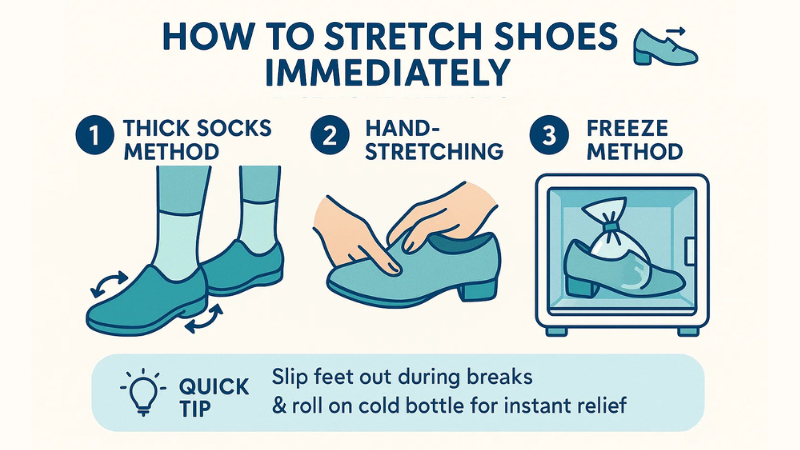
Freeze Method (Overnight Expansion)
- Fill two small zip-lock bags with water (about halfway).
- Place each bag inside the shoe, pushing it into the tight spots.
- Put the shoes in the freezer overnight—the water will turn to ice and expand, stretching the material.
- Remove in the morning, let them thaw for a few minutes, and try them on.
Best for: Leather or synthetic shoes that need a gentle, even stretch.
Extra Quick Tip for Emergency Comfort:
If you’re already at work and your shoes are hurting, slip your feet out during breaks and roll them over a cold water bottle or massage ball—this relaxes your feet and relieves pressure until you can stretch them at home.
2. How to Stretch Shoes Immediately at Home
When shoes feel slightly too tight — especially new ones — you can often break them in using gentle at-home methods. The key is gradual stretching so the material loosens without tearing or deforming.
Rubbing Alcohol Spray
- Why it works: Rubbing alcohol slightly relaxes the shoe’s material, making it more pliable.
- How to do it:
- Mix equal parts rubbing alcohol and water in a spray bottle.
- Lightly mist the inside of the shoe (don’t soak it).
- Put the shoes on while still damp and walk around for 20–30 minutes.
- Best for: Leather or faux leather shoes.
Tip: Avoid spraying the outside if you want to preserve the finish.
Rolled Towel or Thick Socks
- Why it works: Creates steady outward pressure overnight.
- How to do it:
- Roll up a towel or stuff thick socks tightly into the toe area.
- Keep them inside overnight to maintain the stretch.
- Best for: Sneakers, loafers, and casual shoes.
Tip: Works better if you warm the shoes slightly with a hairdryer before stuffing.
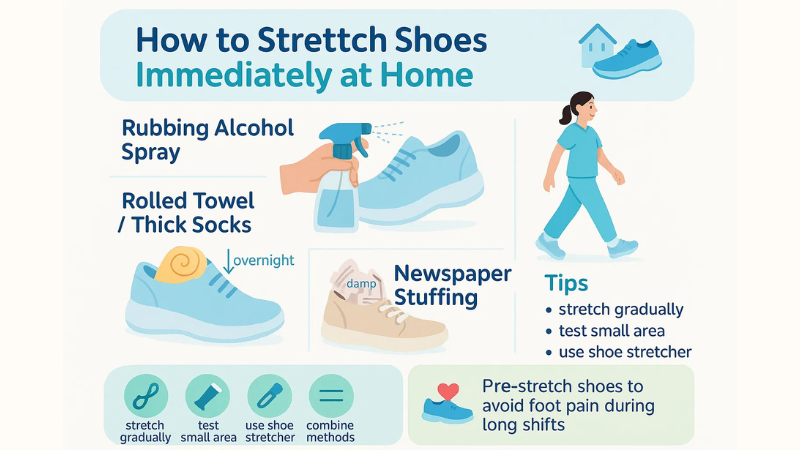
Newspaper Stuffing
- Why it works: As damp newspaper expands while drying, it gently pushes out the shoe.
- How to do it:
- Slightly dampen (not soak) crumpled newspaper.
- Fill the shoes completely so they keep their shape.
- Leave overnight, then remove and let air dry.
- Best for: Canvas or fabric shoes.
Tip: Don’t use for delicate leathers — moisture can stain.
Extra Tips to Stretch Shoes at Home Safely
- Stretch gradually — forcing too much too soon can crack or warp shoes.
- Always test a small hidden area before applying any moisture.
- Use shoe stretchers for a more professional, even expansion.
- For stubborn tightness, combine methods (e.g., alcohol spray + thick socks).
Pro Care Note for Nurses & On-the-Go Workers:
If you wear shoes for long hospital shifts or standing jobs, stretching them before regular use can prevent blisters, bunions, and foot fatigue. More comfort means better focus and energy during the day.
All of these techniques will be in vain if you don’t take care of your feet properly. But how to do so? Don’t be worried. For detailed information, check Nurse Foot Care Tips.
3. How to Stretch Shoes Immediately with a Hair Dryer
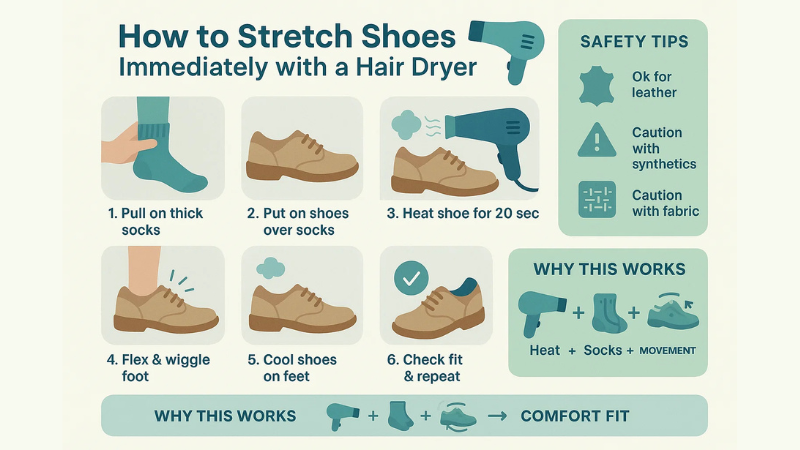
Put on one or two pairs of thick cotton socks. This creates extra bulk inside the shoes, which helps them stretch more effectively while also protecting your feet from direct heat.
Put the Shoes On
Wear the shoes that feel tight. Make sure they’re fully on your feet — you’ll be stretching them in the exact spots they’re uncomfortable.
Apply Heat to Tight Areas
- Turn your hair dryer to a medium or high heat setting.
- Hold it 6–8 inches away from the shoe to avoid burning or warping the material.
- Focus on the tight areas (toe box, sides, or heel) for 20–30 seconds at a time.
- Keep moving the dryer to distribute the heat evenly — never let it stay in one spot for too long.
Flex and Move Your Toes
While applying heat, wiggle your toes, bend your feet, and move them around inside the shoes. This helps the material stretch naturally in the shape of your feet.
Keep Wearing Them While Cooling
After heating, keep the shoes on until they completely cool down. This allows the newly stretched material to set in its expanded shape.
Test and Repeat if Necessary
If they’re still a bit snug, repeat the process until you get the comfort you want. For leather shoes, 1–2 rounds are usually enough, while synthetic materials may take a bit longer.
Safety Tips to Follow When Stretching Shoes with a Hair Dryer
- For leather shoes: Apply a leather conditioner afterward to prevent dryness or cracking.
- For synthetic shoes: Avoid overheating — synthetic materials can warp or melt if exposed to too much heat.
Never use this method on delicate fabrics like satin or suede without extra caution (low heat only).
Why This Works
Heat softens the shoe material, making it more flexible. Wearing thick socks while moving your feet forces the warm material to stretch to your foot’s shape, and letting it cool while still worn locks in that shape.
4. Best Way to Stretch Shoes Immediately Without Damaging Them
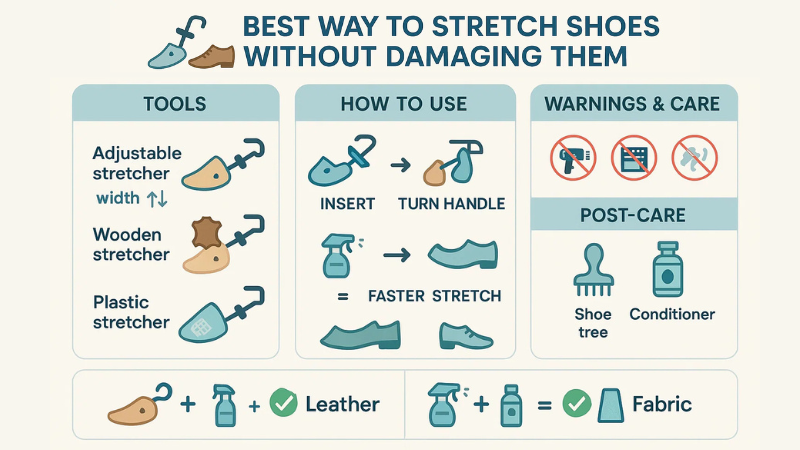
A shoe stretcher is the most reliable tool because it applies even pressure and avoids irregular bulges.
Use Adjustable Stretchers:
These allow you to expand both the width and length of the shoe.
Use Material-Specific Stretchers:
- Wooden Stretchers – Best for leather shoes, as they absorb moisture and keep the shoe’s form.
- Plastic Stretchers – Work better for fabric or synthetic shoes, where moisture absorption isn’t needed.
How to use:
- Insert the stretcher into the shoe.
- Turn the handle slowly until you feel resistance (don’t over-tighten).
- Leave it in for 24–48 hours.
- Check the fit, and repeat if necessary.
Pair with a Leather or Fabric Stretching Spray
If your shoes are tight leather or suede, a stretching spray softens the fibers, allowing the stretcher to work faster.
Steps:
- Lightly spray the inside of the shoe (especially tight spots).
- Insert the stretcher immediately while the shoe is slightly damp from the spray.
- Leave it for at least overnight.
Tip: For fabric shoes, a light mist of water can work, but avoid soaking.
Targeted Pressure for Pinch Points
If only certain areas are tight (like the toe box or sides), use a bunion plug attachment with your stretcher. This focuses stretching exactly where it’s needed—perfect for removing pressure points without affecting the entire shoe.
Quick, High-Heat Methods to Avoid
Some people try:
- Hair dryers
- Ovens
- Boiling water steam
These can cause permanent damage—cracking leather, weakening glue, or warping shape. Slow, gentle stretching is always safer.
Additional Comfort Boost
After stretching:
- Insert shoe trees when not in use to maintain the new size.
- Use leather conditioner to keep leather soft and prevent cracking.
Summary of the Best Approach:
Wooden stretcher + stretching spray (for leather) or plastic stretcher + light mist (for fabric) = long-lasting comfort without ruining the shape.
5. How to Stretch Shoes Overnight for Maximum Comfort
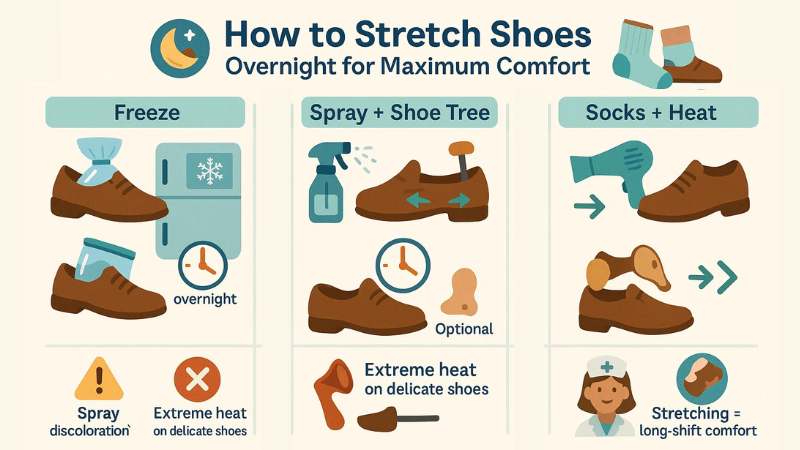
Water expands when it freezes. By placing water-filled bags inside your shoes and freezing them, the gradual expansion stretches the shoe material without applying sudden force.
Step-by-step:
- Fill two sturdy, sealable plastic bags (like Ziploc) about halfway with water. Remove as much air as possible.
- Place the bags snugly inside each shoe, making sure they press against tight spots.
- Put the shoes (with the bags inside) in a larger plastic bag to prevent water damage.
- Leave in the freezer overnight. As the water freezes, it will expand and stretch the shoes slightly.
- Remove in the morning and let the ice melt before taking the bags out.
Best for:
- Synthetic leather, canvas, and fabric shoes.
- Not ideal for delicate suede or thin genuine leather (risk of water stains).
Pro Tip: If you need more stretch, repeat the process over 2–3 nights instead of forcing a big stretch at once.
Stretch Spray + Shoe Tree – Even Stretch for a Perfect Fit
Stretch sprays soften shoe fibers (especially leather), while shoe trees apply consistent, adjustable pressure to expand them evenly.
Step-by-step:
- Lightly spray the inside (and optionally outside) of your shoes with a shoe stretching spray.
- Insert an adjustable shoe tree to match your foot shape.
- Turn the adjustment knob until the shoe feels snugly stretched (but not overly tight).
- Leave overnight for gradual expansion.
Best for:
- Leather, suede (with caution), and quality synthetics.
- Perfect for dress shoes, boots, and work shoes.
Pro Tip: For targeted tight spots (like toe box pinching), use a spot-stretch attachment on the shoe tree or a rounded object (like the back of a spoon) after spraying.
Thick Socks + Gentle Heat (Optional Add-On)
The warmth loosens shoe fibers, while your feet (in thick socks) naturally push the shoes into shape.
Step-by-step:
- Wear the thickest socks you own.
- Put on the shoes and gently warm them using a hair dryer for 30–60 seconds (medium heat, keep moving to avoid damage).
- Walk around until they cool, letting them mold to your foot shape.
Best for:
- Leather, faux leather, and some synthetics.
Not safe for heat-sensitive materials like PVC or thin plastic.
Safety & Comfort Notes
- Avoid extreme or sudden stretching on delicate materials—small increments prevent cracks or misshaping.
- Always test stretch sprays on a hidden section first to check for discoloration.
- If you’re a nurse or someone who spends long hours standing, choose shoes that are already close to your perfect fit, then use these methods for fine-tuning.
If comfort is your main goal, check out Best Shoes for Nurses — these shoes often pair perfectly with stretching techniques since they’re designed with supportive and flexible materials.
Material-Specific Shoe Stretching Tips
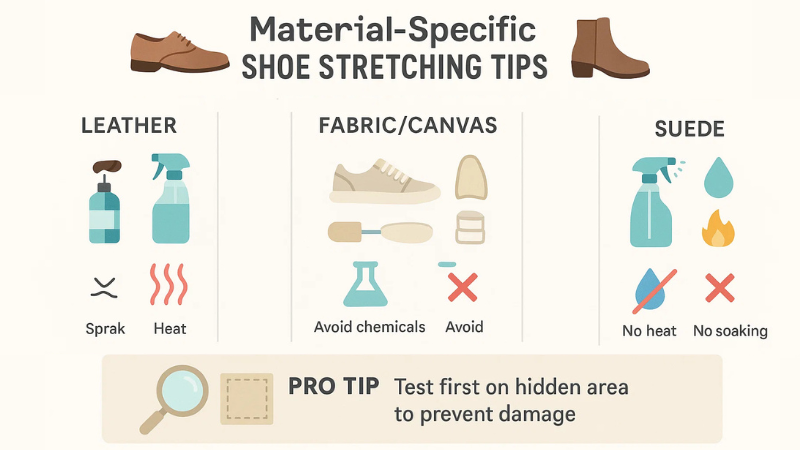
Different shoe materials react differently when stretched, so knowing your shoe type is key to preventing damage while improving comfort.
- Leather Shoes:
Leather is durable but can crack if forced. Heat and alcohol-based sprays soften the fibers, allowing them to stretch without tearing. Always start gradually and focus on tight spots, like the toe box or heel area.
- Fabric & Canvas Shoes:
These materials are more flexible, so gentle heat combined with consistent pressure (like using a shoe tree or rolled socks) works best. Avoid harsh chemicals; they can weaken the fibers or cause color fading.
- Suede Shoes:
Suede is delicate. Never soak it with water—this can leave permanent marks. Instead, use specialized stretching sprays and mild heat. Patience is essential; slow, careful stretching is the key.
Pro Tip: Always test any spray or method on a hidden area first. This small step prevents unwanted discoloration or material damage while ensuring your shoes stretch safely.
What Not to Do When Stretching Shoes
Even the best techniques can go wrong if you aren’t careful. Avoid these common mistakes:
- Soaking non-waterproof shoes:
Water can warp materials, ruin glues, and leave stains. Only apply moisture to materials that can handle it, like canvas.
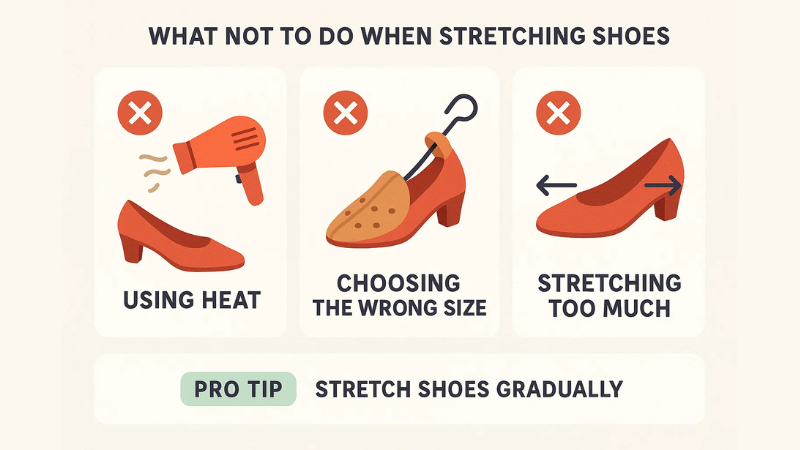
- High heat on synthetics or glued soles:
Excessive heat can melt glue, warp plastic, or shrink synthetic fabrics. Keep hair dryers or other heat sources at medium settings and move constantly.
- Overstretching:
Forcing shoes beyond their natural flexibility can permanently deform them. Always stretch gradually and check fit frequently.
Pro Tip: When in doubt, go slow. Incremental stretching over several sessions is safer and more effective than a single aggressive attempt.
Recommended Products for Quick and Safe Stretching
Products | |
Leather Shoe Strech Spray | |
Plastic Shoe Stretcher | |
Wood Shoe Stretcher | |
Adjustable Shoe Stretcher | |
Mens Calf Socks | |
Mens Hiking Socks | |
Lether Shoe Conditioner |
Conclusion: Comfortable Shoes for Long Shifts
Knowing how to stretch shoes immediately is essential for nurses and anyone on their feet all day. Quick methods like thick socks, hair dryers, and freeze techniques provide instant relief, while shoe stretchers and overnight methods ensure long-term comfort. Properly stretched shoes prevent blisters, fatigue, and soreness during shifts.
FAQs About Stretching Shoes Immediately for Nurses
Can I stretch shoes immediately without a stretcher?
Yes! Thick socks, hand-flexing, or the freezer bag method works well.
Is it safe to use a hair dryer to stretch shoes?
Yes, with moderate heat while moving your feet inside.
What’s the fastest way to expand shoes at home?
Thick socks, rubbing alcohol spray, or the freezer bag method.
Will stretching damage my shoes?
Overheating, soaking, or overstretching can cause damage.
How long does it take to stretch tight shoes?
Immediate relief can occur in 10–30 minutes; overnight methods provide safe gradual expansion.
Leave a Reply