
If you’re a nurse, you already know the toll long hours on unforgiving hospital floors can take on your feet. By the end of a shift, it’s not just your toes and heels that ache — your entire arch can feel like it’s been through a marathon.
Many nurses turn to shoe inserts for extra cushioning and support, but here’s the catch: if you don’t use inserts the right way, they can actually hurt your arch instead of helping.
In this guide, we’ll explore how to use inserts for nurse shoes without causing discomfort, plus how to choose the right type for your needs, fit them correctly, and keep your feet happy shift after shift.
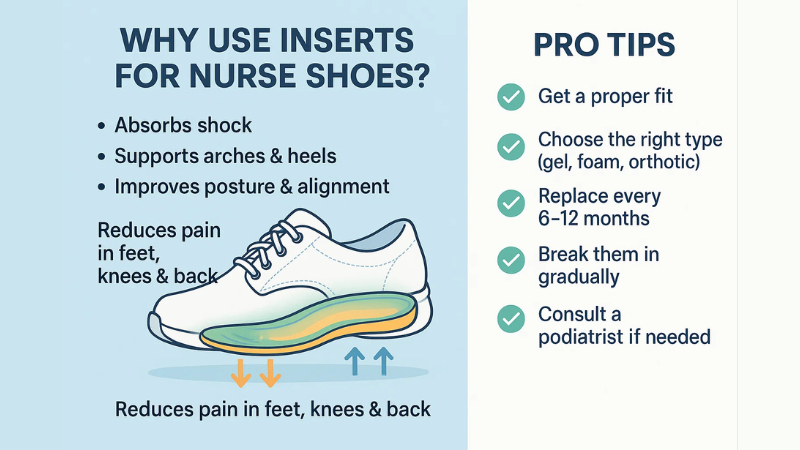
Why Use Inserts For Nurse Shoes?
Spending 10 to 12 hours on your feet walking and standing on hard surfaces like tile or concrete can take a serious toll on your feet and body.
Each step sends shockwaves through your arches, heels, knees, and even your lower back. Over time, this constant impact can cause painful conditions such as arch pain, plantar fasciitis, and joint problems.
This is exactly why shoe inserts are a game-changer for nurses. Inserts provide targeted arch and heel support, helping to absorb shock and distribute pressure more evenly across your feet. They can relieve painful pressure points and improve your overall posture by supporting proper foot alignment.
This support doesn’t just ease foot discomfort—it reduces strain all the way up your legs and back, helping you stay energized throughout your shift and after.
If you’re already experiencing foot pain, combining inserts with proven Nurse Foot Care Tips can provide comprehensive relief and keep you comfortable on your feet.
Pro Tips for Choosing and Using Inserts For Nurse Shoes:
- Get a proper fit: Make sure the inserts match your shoe size and shape to avoid slipping or bunching.
- Choose the right type: Gel inserts are great for shock absorption; foam inserts provide cushioning; orthotic inserts offer structural support.
- Replace regularly: Inserts wear out over time. Replace them every 6–12 months depending on usage.
- Break them in: Wear new inserts gradually to allow your feet to adjust without discomfort.
- Consult a podiatrist: If you have chronic pain, custom orthotics may be worth the investment.
How to Choose Inserts for Nurse Shoes
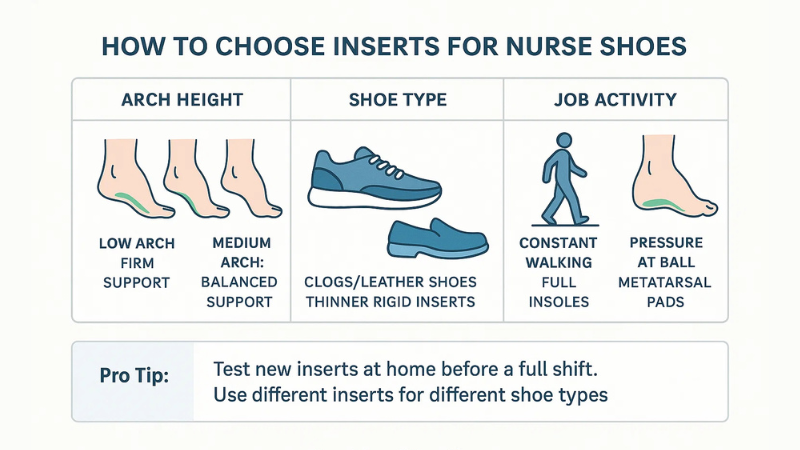
Not all shoe inserts are the same, and selecting the right one depends on your specific needs. When deciding how to choose inserts for nurse shoes, consider the following key factors:
- Arch Height:
Identify your natural arch type—low, medium, or high—and select inserts that provide the right level of support. For example, low arches benefit from firmer, more supportive inserts, while high arches may need cushioned inserts that provide extra shock absorption.
- Shoe Type:
Different shoes require different insert shapes and thicknesses. Sneakers generally accommodate thicker, cushioned inserts, while clogs and leather nurse shoes may need thinner or more rigid inserts to fit comfortably without altering the shoe fit.
- Job Activity:
If you’re on your feet constantly walking, full-length insoles with cushioning and support work best to reduce overall foot fatigue. If you stand mostly in one place, heel cups can provide targeted relief from heel pain. For those who experience pressure on the ball of the foot, metatarsal pads can alleviate discomfort.
By matching the insert type to your foot structure, shoe style, and activity level, you can maximize comfort and reduce foot pain throughout your shift.
Pro Tip:
- When trying new inserts, test them for at least a few hours around the house before wearing them for a full shift. This helps you assess comfort and avoid surprises on the job.
- If you switch between different shoes for work, consider having multiple pairs of inserts tailored to each shoe type.
Best Insoles for Standing Long Hours
Nurses spend countless hours on their feet, often walking or standing on hard hospital floors that offer little natural cushioning. This can lead to chronic foot pain, fatigue, and even long-term joint issues.
Choosing the right insoles is crucial for comfort, support, and injury prevention during those demanding shifts. Here’s an in-depth look at the best types of insoles suited for nurses standing long hours:
- Memory Foam Insoles:
Memory foam insoles are prized for their soft, contouring comfort. They adapt to the exact shape of your feet, distributing pressure evenly and reducing hotspots where pain usually develops.
This personalized cushioning helps prevent soreness and reduces fatigue by absorbing the constant impact on hard surfaces. However, memory foam can compress over time, so these insoles may need replacement more frequently.
- Gel Insoles:
Gel insoles excel in shock absorption. By dispersing the energy from each step, they lessen the stress placed on the heels, balls of the feet, and joints.
This makes gel insoles especially effective for nurses who spend prolonged hours on their feet or walk frequently throughout their shifts. They also provide a slight bounce-back effect, giving your feet extra energy return as you move.
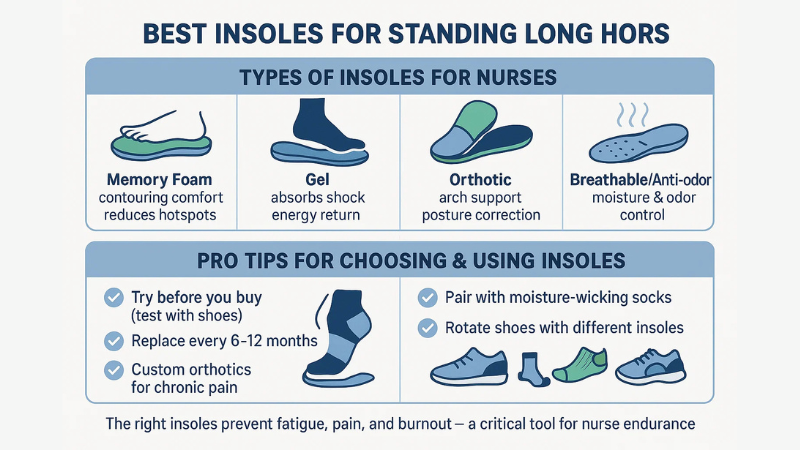
- Orthotic Insoles:
Orthotic insoles are designed to provide superior arch support and alignment correction. Unlike generic insoles, these can help correct structural imbalances in your feet, such as overpronation (rolling inwards) or high arches, which often contribute to knee, hip, and back pain.
By stabilizing your feet and improving posture, orthotic insoles can drastically reduce discomfort and the risk of injury. Many nurses find them indispensable for preventing chronic pain conditions.
- Breathable and Anti-Odor Materials:
Foot health isn’t just about support—it’s also about hygiene and comfort. Insoles made from breathable fabrics help wick away moisture, reducing sweat buildup that can lead to blisters and infections.
Some insoles are treated with antimicrobial agents that prevent odor-causing bacteria, keeping your feet fresh even after back-to-back shifts in closed shoes.
- Specialized Inserts:
In addition to full-length insoles, nurses may benefit from targeted inserts such as heel cups, which cushion and stabilize the heel, or metatarsal pads that relieve pressure on the ball of the foot. These specialized inserts can address specific pain points and complement your overall footwear support system.
Why This Matters for Nurses:
Standing for hours puts relentless pressure on your feet and legs. The right insoles act as a critical shock absorber and support system, reducing muscle fatigue and enhancing your endurance throughout the day. Proper insoles can prevent common nursing-related ailments such as plantar fasciitis, Achilles tendonitis, and lower back pain.
Pro Tips for Choosing and Using Insoles For Nurse Shoes:
- Try Before You Buy: Bring your usual nursing shoes when shopping for insoles to test fit and comfort together. An insole that feels good in one shoe may not in another.
- Replace Regularly: Insoles lose their cushioning and support over time, typically every 6 to 12 months depending on wear. Don’t wait until you feel pain—replace proactively.
- Consider Custom Orthotics: If you have ongoing foot problems or deformities, consult a podiatrist for custom orthotics tailored to your feet’s unique needs.
- Pair with Good Socks: Use moisture-wicking, padded socks to complement your insoles, enhancing comfort and reducing friction that causes blisters.
- Rotate Your Shoes: Use more than one pair of nursing shoes with different insoles to allow each pair to recover and extend overall shoe life.
If you want to protect your feet and boost your stamina during long shifts, investing in the right insole is just as important as choosing the best nurse shoes. The combination of proper footwear and high-quality insoles can truly transform your workday experience.
Foot Support Inserts for Nurse Fatigue Relief
Nurse fatigue often starts at the feet — the foundation of your entire body. When your arches don’t receive proper support, your muscles and joints have to work harder to maintain balance and posture throughout those marathon shifts.
This extra effort leads to muscle fatigue, joint pain, and overall exhaustion that can ripple up through your calves, knees, hips, and lower back.
Foot support inserts act as a crucial corrective tool. By filling the gap under your arch, these inserts help maintain natural foot alignment. This support redistributes pressure evenly across your feet, so no single area bears excessive strain. The result? Your muscles don’t have to overcompensate, which reduces fatigue and the risk of injury.
Proper arch support also enhances your gait, improving stability and reducing the likelihood of slips or falls — a common hazard in busy hospital environments.
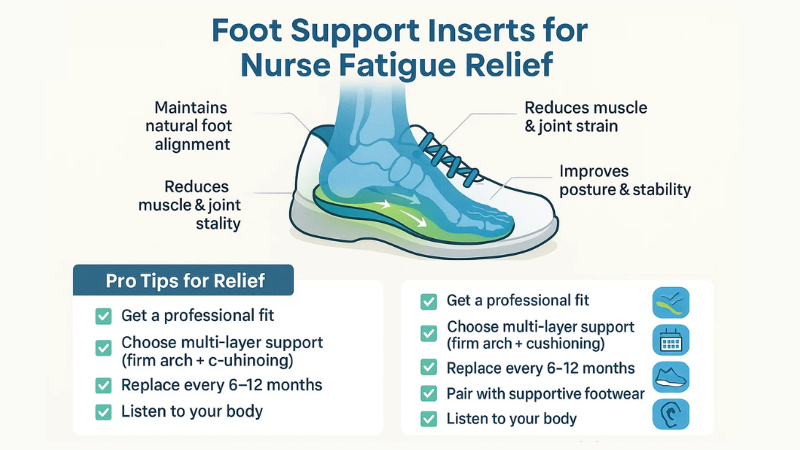
Over time, using foot support inserts can help you maintain better posture, prevent chronic pain, and preserve energy levels that are vital for both your professional performance and personal well-being.
In essence, foot support inserts do more than cushion your feet—they protect your entire kinetic chain and contribute to long-term health and stamina.
Pro Tips for Maximizing Nurse Fatigue Relief with Foot Inserts:
- Get a Professional Fit: Consider seeing a podiatrist or using a foot scanning service to find the insert that perfectly matches your arch type and foot shape.
- Choose Inserts with Multi-Layer Support: Look for inserts combining firm arch support with soft cushioning to balance stability and comfort.
- Replace Inserts Regularly: Inserts wear down with time, so changing them every 6-12 months ensures continued support and fatigue relief.
- Combine with Supportive Footwear: Inserts work best when paired with well-fitted nursing shoes designed for all-day wear.
- Listen to Your Body: If you notice pain shifting or new discomfort, reassess your inserts to ensure they are still the right fit.
By investing in quality foot support inserts, you’re not just treating foot pain—you’re proactively preventing nurse fatigue and boosting your ability to provide excellent patient care, shift after shift.
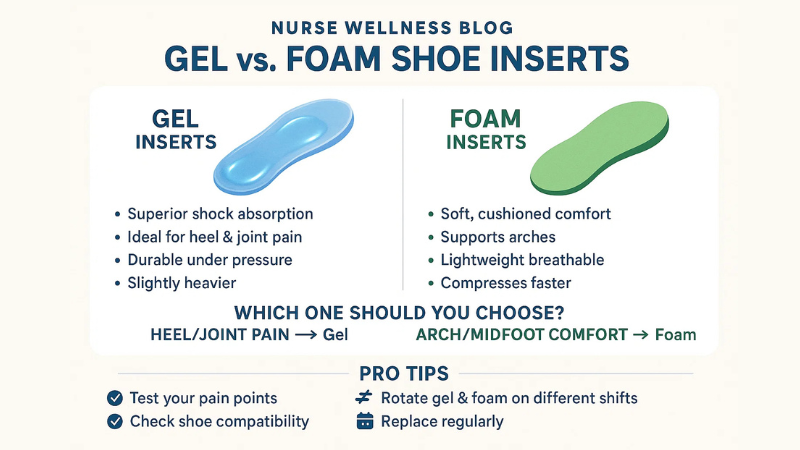
Gel vs. Foam Shoe Inserts
Choosing between gel and foam shoe inserts depends largely on the kind of support and comfort you need, as well as your specific foot issues. Both types offer benefits, but their differences can significantly affect how your feet feel throughout your nursing shifts.
- Gel Inserts:
Gel inserts are known for their excellent shock-absorbing properties. They are typically made from a dense, flexible silicone or polyurethane material that cushions impact effectively, especially under the heel and ball of the foot.
Because of this superior shock absorption, gel inserts are ideal for nurses who experience heel pain, plantar fasciitis, or joint discomfort in the knees or hips.
The gel’s flexibility allows for some natural foot movement, though gel inserts tend to be slightly heavier than foam. They also hold up well under prolonged pressure, making them durable for long shifts.
- Foam Inserts:
Foam inserts, particularly those made from memory foam or EVA (ethylene-vinyl acetate), provide a soft, cushioned feel that molds snugly to your foot’s shape. This contouring effect supports your arches and helps distribute weight evenly across your feet.
Foam inserts tend to be lighter than gel and offer more overall cushioning, which makes them a great choice if your primary need is midfoot support and comfort. However, foam can compress faster than gel, so it may need to be replaced more frequently to maintain its effectiveness.
Which One Should You Choose?
The choice between gel and foam often depends on your foot condition and work demands. If you struggle mainly with heel or joint pain, gel inserts might offer the relief you need. If arch support and general cushioning are your priorities, foam could be a better fit.
Using Both Inserts for Nurse Shoes
Some nurses find switching between gel and foam inserts useful—using gel on heavier, more active shifts for shock absorption, and foam on lighter days for cushioned comfort. This rotation can help extend the lifespan of your inserts and cater to varying comfort needs.
Pro Tips for Choosing Gel vs. Foam Inserts:
- Test Your Pain Points: Identify whether your pain is mostly in your heels, arches, or overall foot—this helps direct you toward the best insert type.
- Consider Weight and Breathability: Foam inserts are generally lighter and may offer better breathability, which is important for long shifts.
- Durability Check: If you need an insert that holds shape longer under pressure, gel inserts often outlast foam.
- Use Orthotic-Friendly Shoes: Make sure your nursing shoes can accommodate inserts without feeling too tight or altering your fit.
- Rotate Your Inserts: Using gel and foam inserts on different days can help manage different types of foot stress and prolong the life of both.
Choosing between gel and foam inserts isn’t a one-size-fits-all decision. Paying attention to your foot’s specific needs and how your body responds during and after shifts will guide you toward the best choice.
When combined with well-fitting nurse shoes, the right insert can keep you comfortable, supported, and ready for whatever your day brings.
How to Fit Orthotic Inserts into Nursing Shoes
Getting the fit right when adding orthotic inserts is crucial to avoid arch strain and maximize comfort during long nursing shifts. Here’s a simple step-by-step guide to help you fit your inserts perfectly into your nursing shoes:
- Remove the Original Insole if Needed: Nursing shoes often come with built-in insoles that add cushioning but may reduce space inside the shoe. If your shoes feel tight after inserting orthotics, try removing the factory insole to create more room and prevent discomfort.
- Trim the Insert to Match Your Shoe’s Insole Length: Most orthotic inserts come in a standard size and are designed to be trimmed. Use your shoe’s original insole as a template—lay it on top of the insert, mark the edges, and carefully trim the insert to fit snugly without bunching or sliding.
- Align the Arch Support: Place the insert inside the shoe so the arch support aligns precisely with the natural curve of your foot. Proper alignment is essential to ensure the insert supports your arch effectively and prevents additional strain.
- Test the Fit with Socks and While Standing: Put on your nursing socks and shoes with the inserts inside, then stand and walk around to confirm the fit feels comfortable and supportive without pinching or slipping.
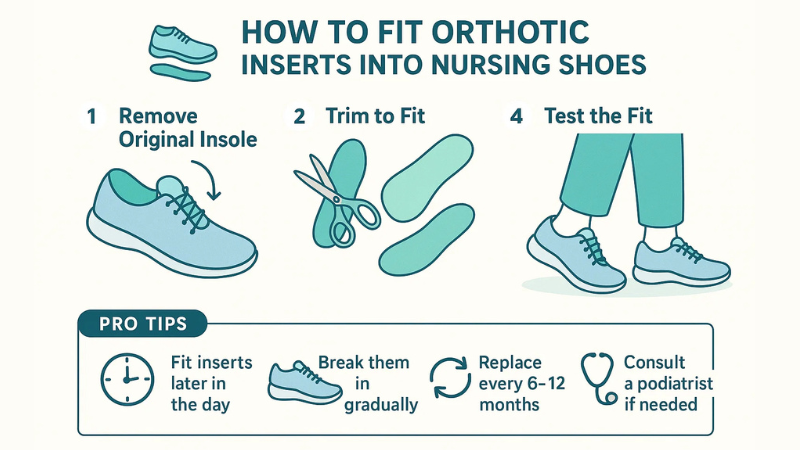
Getting these steps right ensures your orthotic inserts provide the relief and support you need to keep going strong throughout your shifts.
Pro Tips for Perfect Insert Fit
- Fit Inserts Later in the Day: Your feet naturally swell throughout the day, so fitting inserts in the afternoon or evening helps ensure they won’t feel too tight during work.
- Gradually Break Them In: Wear your shoes with inserts for a few hours initially, then increase wear time to avoid sudden discomfort.
- Replace Worn Inserts Regularly: Over time, inserts lose their shape and support. Aim to replace them every 6 to 12 months for consistent comfort.
- Consult a Podiatrist if Needed: If you experience persistent pain or discomfort, professional custom orthotics may be a worthwhile investment.
For more tips on preventing foot pain, be sure to check out How to Prevent Foot Pain During Long Shifts.
Common Mistakes While Using Inserts For Nurse Shoes That Hurt the Arch
Even the best orthotic inserts can end up causing more harm than good if you don’t use them properly. Here are some common mistakes that can actually hurt your arch instead of supporting it:
- Using Inserts with an Arch Height Too High for Your Foot:
Inserts that are too rigid or have excessive arch height can create pressure points, leading to discomfort, pain, and even worsening foot conditions. It’s important to match the insert’s arch profile to your natural foot shape—whether low, medium, or high arches.
- Wearing Inserts in Shoes That Are Already Too Tight:
Adding inserts to tight-fitting shoes reduces the available space, which can squeeze your feet, restrict circulation, and cause pain or numbness. Always ensure your shoes have enough room to accommodate inserts without making the fit too snug.
- Skipping the Break-In Period:
Your feet need time to adapt to new inserts. Wearing them for extended periods right away can cause soreness and strain. Gradually increase wear time over days or weeks to allow your muscles and ligaments to adjust comfortably.
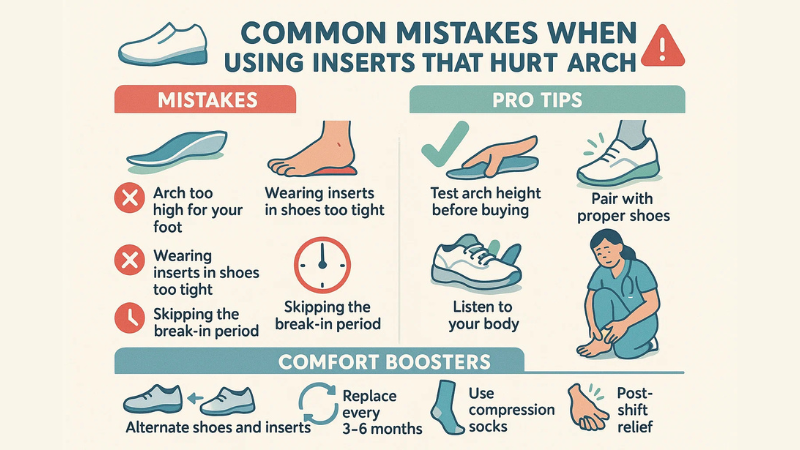
Avoiding these mistakes ensures your inserts truly support your arches and keep you comfortable during long shifts.
Pro Tips to Protect Your Arches When Using Inserts for Nurse Shoes:
- Test Arch Height by Pressing the Insert: Before buying, press your fingers into the arch area of the insert to gauge firmness and height. Comfort is key!
- Try Inserts with Different Levels of Support: Some brands offer multiple arch options—low, medium, and high. Experiment to find what suits you best.
- Pair Inserts with Proper Shoes: Always use inserts in shoes designed for nursing or work, which offer enough depth and stability.
- Listen to Your Body: If you feel new or unusual pain, reassess your insert choice or consult a podiatrist for personalized advice.
Pro Tips for Comfort and Support When Using Inserts for Nurse Shoes
Simple habits to maximize foot comfort and prolong insert life.
- Alternate Between Different Pairs of Shoes and Inserts: Giving your feet a break from one shoe or insert style helps prevent overuse injuries and keeps your muscles balanced.
- Replace Inserts Every 3–6 Months: Over time, inserts lose their cushioning and support. Regular replacement ensures you continue to get the maximum benefit and avoid foot fatigue.
- Combine Inserts with Compression Socks: Compression socks improve blood flow and reduce swelling, enhancing the effectiveness of your inserts and keeping your feet energized throughout your shift.
- Post-Shift Relief: After a long day, use techniques from our Post-Shift Foot Massage Tips to soothe tired feet and accelerate recovery.
For post-shift relief, try a few of our Post-Shift Foot Massage Tips.
Recommended Products
Product | |
Orthotic Footbed For Extra Arch Support | |
Comprssion Socks for Nurses | |
Gel Shoe Inserts | |
Foam Shoe Inserts with Arch Support | |
Orthotic Foam Shoe Inserts |
Conclusion
The right shoe inserts can transform your day, boosting energy and reducing fatigue when chosen and used properly.
Using shoe inserts the right way can mean the difference between dragging through your last patient rounds and walking out of work with energy to spare. Remember: fit, type, and proper usage matter just as much as the insert itself.
.
FAQs About Using Inserts For Nurse Shoes
How do I know which inserts are best for arch support?
Choose inserts that match your natural arch height and address your specific pain points.
Can inserts cause more pain if used incorrectly?
Yes — the wrong fit or too much arch support can strain your foot.
What’s the difference between custom and over-the-counter insoles?
Custom insoles are made for your exact foot shape, but high-quality OTC versions can still offer excellent comfort.
Do shoe inserts help with nurse fatigue?
Absolutely — they improve alignment and reduce muscle strain.
How often should I replace my insoles?
Every 3–6 months, or sooner if you notice flattening or reduced cushioning.
Leave a Reply