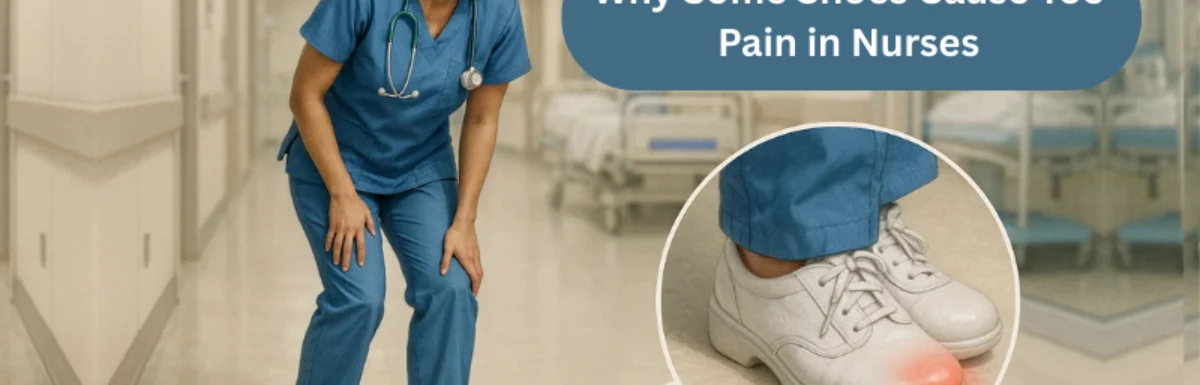
Have you ever felt that sharp toe pain creeping in halfway through your nursing shift? If so, you’re definitely not alone. Toe pain from nurse shoes is a surprisingly common problem, especially after long hours on your feet.
When your shoes don’t fit right or put pressure on your toes, cramping, numbness, and discomfort can quickly follow.
But don’t worry, understanding why your nurse shoes might be causing this pain is the first step toward relief. Let’s explore what’s behind the problem and how you can fix it, so you can focus on what really matters: your patients.
Toe Pain From Nurse Shoes-What’s the Reason
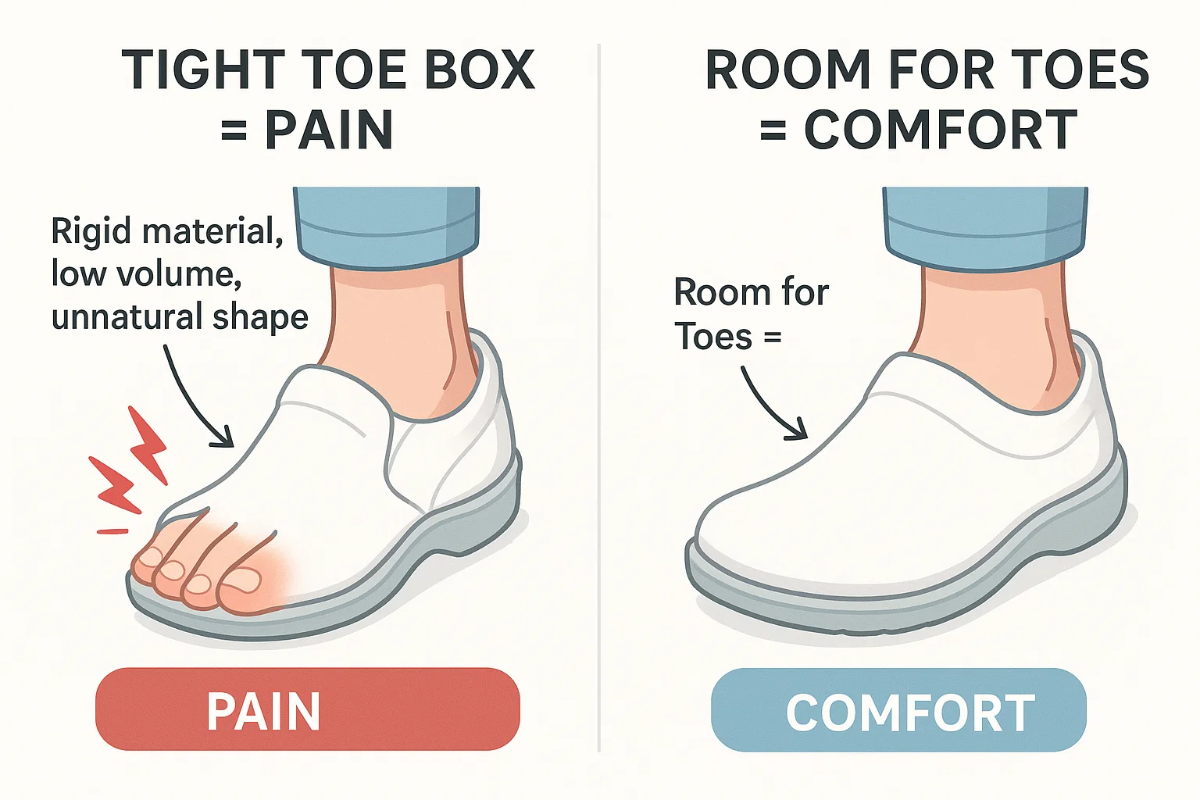
One of the main culprits is a tight toe box that squeezes your toes together all day. Many nurse shoes have poor shapes or low volume that don’t match the natural curve of your foot. Add in rigid materials that don’t stretch or flex, and your toes end up trapped, leading to that nagging pain we all want to avoid.
If you’re struggling with toe pain from nurse shoes, this could be why your feet are aching.
Signs of Toe Pain from Nurse Shoes You Shouldn’t Ignore
Have you ever finished a long shift and noticed that your toes feel numb, tingly, or downright painful? It might surprise you, but your shoes could be the main reason behind these uncomfortable sensations.
Nurses spend hours on their feet, and the right footwear can make all the difference. But the wrong pair can cause real trouble. So how do you know if your shoes are the root of the problem?
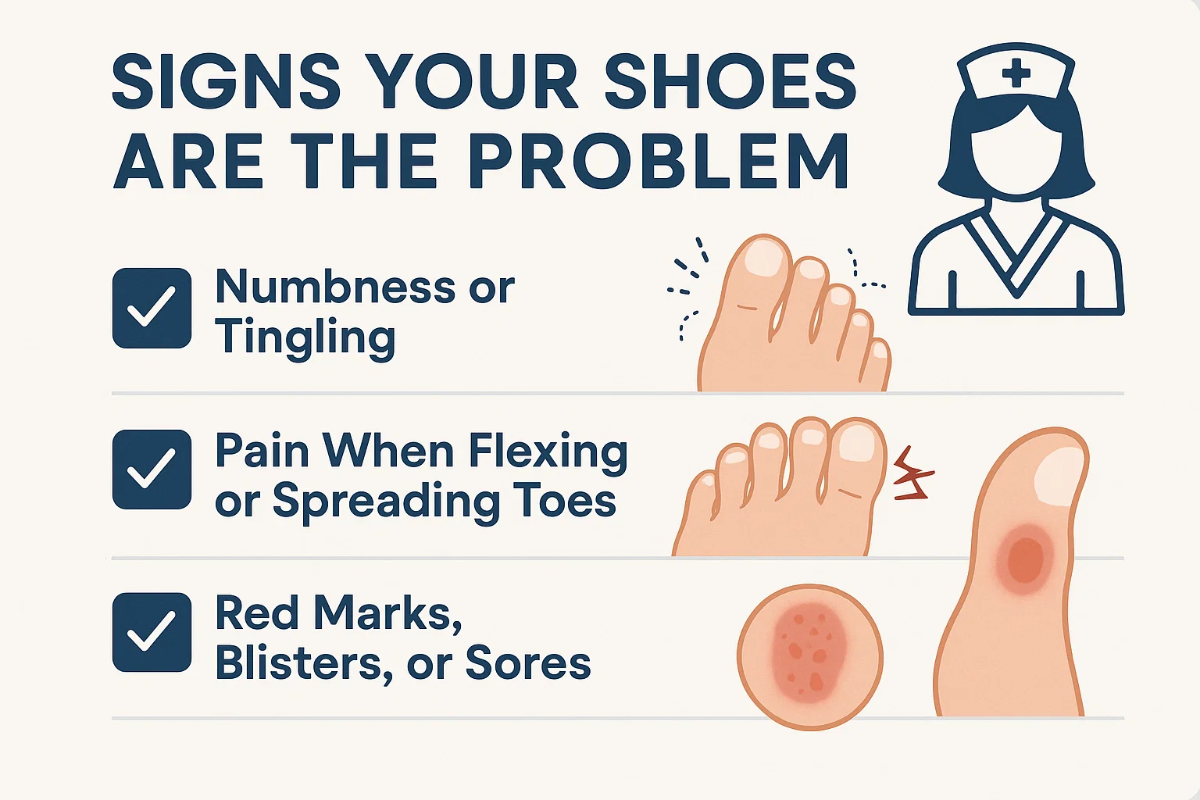
1. Numbness or Tingling in Your Toes After Work
That pins-and-needles feeling, aka medically as paresthesia, is often a sign that your shoes are compressing nerves or blood vessels in your feet.
Shoes that are too tight or poorly shaped can squeeze your toes, cutting off circulation and causing that numb or “falling asleep” sensation. If this happens frequently, it’s not just annoying; it can lead to nerve damage or chronic pain.
Ask yourself: Do your toes feel numb right after taking off your shoes? Does the feeling improve after resting or massaging your feet? If yes, your shoes might be restricting blood flow.

2. Pain When Flexing or Spreading Your Toes
Your toes need room to move naturally. They help balance and absorb shock as you walk or stand. If your shoes are too narrow or short, they force your toes into an unnatural position. This restriction can cause pain when you try to wiggle or stretch them out after your shift.
Ever tried to spread your toes in tight shoes? It’s nearly impossible! If you feel pain during this simple movement, your shoes aren’t providing enough space for healthy foot function.
3. Red Marks, Blisters, or Sores on Toe Joints
Visible signs of pressure like red marks, blisters, or sores around your toes are clear evidence that your footwear is causing friction. These painful irritations occur when your shoes rub against your skin repeatedly — and in a healthcare setting where you’re constantly on the move, this can quickly turn into a bigger problem.
Ignoring these issues may lead to calluses, corns, or even infections if blisters break open. Plus, chronic irritation can worsen foot deformities over time.
Risks of Ignoring Toe Pain from Nurse Shoes
It’s tempting to brush off foot pain or numbness as “just part of the job,” but prolonged exposure to poorly fitting shoes can cause lasting damage. Left untreated, you could develop serious conditions like neuropathy, bunions, or Morton’s neuroma.
Your feet are literally your foundation, supporting you through every long shift. Protecting them starts with choosing the right footwear and shoes designed with your unique needs in mind.
How to Choose the Best Shoes to Prevent Toe Pain from Nurse Shoes
If any of these signs sound familiar, it’s time to take action. Look for shoes that offer:

- Wide toe boxes to allow natural toe splay
- Good arch support to reduce strain on foot nerves
- Cushioning and shock absorption for comfort over long hours
- Breathable materials to reduce moisture and prevent skin irritation
Investing in footwear made specifically for healthcare workers can help alleviate toe numbness, prevent future injuries, and keep you comfortable throughout every demanding shift.
Have you ever ignored shoe discomfort only to regret it later? What changes did you make? Let’s talk about how you can find the perfect pair that supports your feet and your busy work life.
Mistakes That Lead to Toe Pain from Nurse Shoes
When it comes to picking the perfect nursing shoes, it’s easy to get caught up in the hype around arch support—and while that’s definitely important, it’s only one piece of the puzzle. Believe it or not, many nurses overlook something just as crucial: ample toe space.
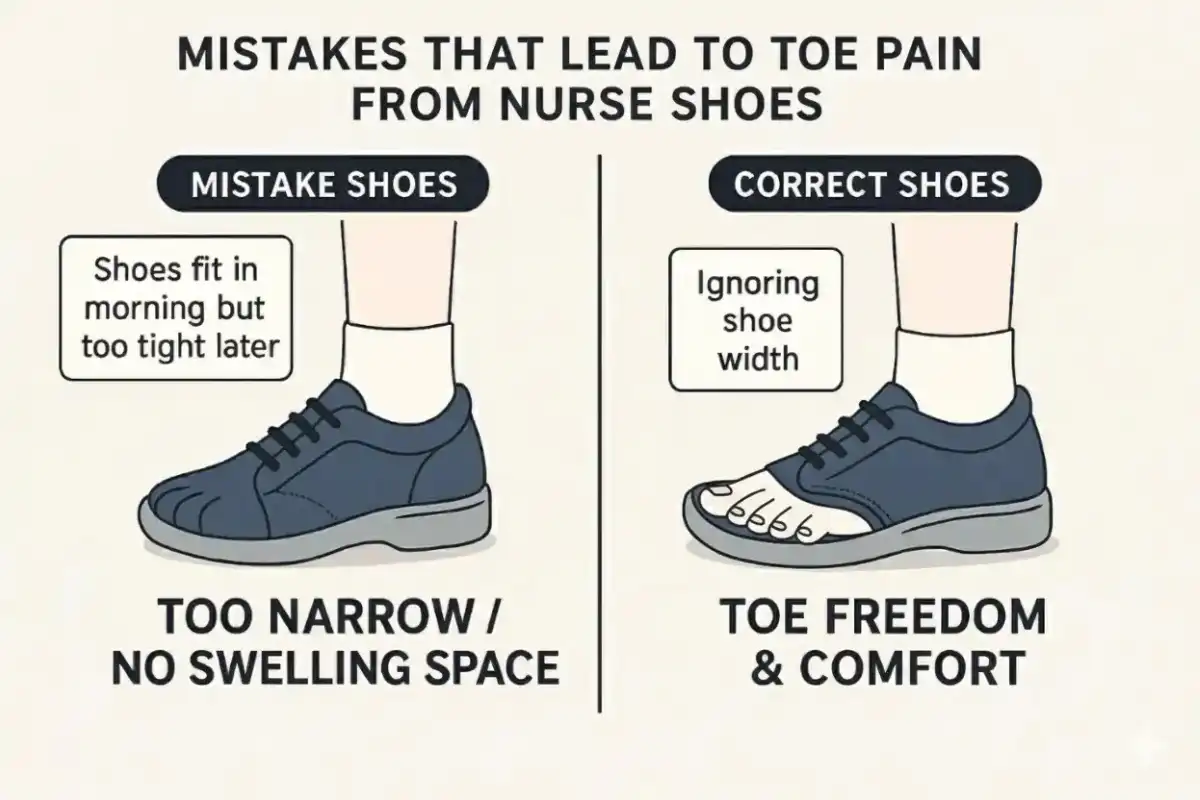
Think about it — after standing and moving around for hours, your feet aren’t the same as when you started your shift. Feet naturally swell throughout the day, especially during those marathon 12-hour shifts in the hospital. Shoes that felt comfortable and snug in the morning might feel tight, pinchy, or downright painful by afternoon.
Here’s a big mistake many make: buying shoes that fit perfectly in the morning but don’t leave room for this daily swelling. It’s like buying clothes that fit before a meal and then feeling uncomfortable right after. Your toes end up cramped, restricted, and unhappy, which can lead to blisters, numbness, or worse.
Another common slip-up? Ignoring shoe width
Did you know shoe width matters just as much as length? Wearing shoes that are too narrow will squish your toes together, causing discomfort and sometimes long-term foot problems. Wide or extra-wide feet need extra-wide shoes.
Unfortunately, many nurses overlook this and end up with painful “pinched toe syndrome” or bunions that develop because the toes have been forced into unnatural positions day after day.
So, what’s the takeaway?
- Don’t just try shoes on first thing in the morning. Test them later in the day when your feet have swelled.
- Pay attention to both length and width. Your toes should wiggle freely without being smushed.
- Remember that comfort and fit are more important than style alone. You can find shoes that look great and feel amazing!
Have you ever experienced sore feet from shoes that felt fine at first? What did you do to fix it? Let’s chat about how to find your perfect fit!
Steps to Prevent Toe Pain from Closed Nurse Shoes
Working long shifts in a hospital means closed-toe shoes are a must. But closed shoes can sometimes turn into a pain, literally, when they press too tightly on your toes.
So, how do you keep your feet comfortable all day without sacrificing safety or dress codes?
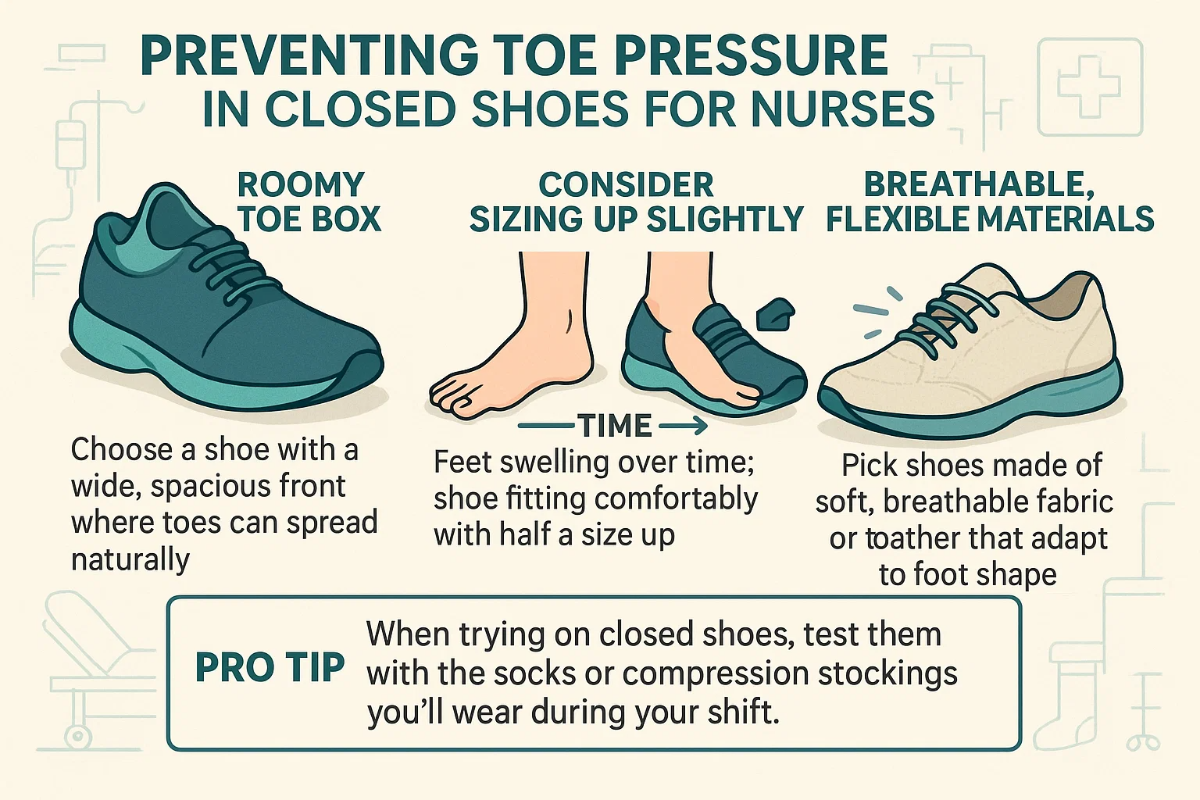
1. Start with a roomy toe box
One of the most important features to look for is a wide and spacious toe box. This means the front part of your shoe isn’t cramped or narrow. When toes have space, you reduce the risk of blisters, pinching, or that dull ache at the end of your shift.
Ever tried squeezing your toes into shoes that feel like a vice? Not fun, right? Shoes with a narrow toe box might look sleek, but they’re a recipe for discomfort and even long-term foot problems.
2. Consider sizing up — just a bit
Do your feet tend to swell after hours on your feet? You’re not alone. Many nurses experience this natural swelling, especially after those marathon shifts. If your shoes feel tight by midday, going up half a size can make a big difference. It’s like giving your feet permission to breathe and move freely without losing support.
But don’t go too big. Oversized shoes can cause slipping and instability, which can be just as dangerous.
3. Pick breathable, flexible materials
Materials matter! Look for shoes made with breathable fabrics or soft leather that can stretch and mold to your foot’s unique shape over time. Rigid, synthetic materials might look durable, but they can pinch and create hotspots where pressure builds up.
Breathability also helps keep your feet dry and comfortable, reducing the chance of irritation and odor. After all, happy feet make for a happier nurse.
Pro Tip: When trying on closed shoes, test them with the socks or compression stockings you’ll wear during your shift. This ensures your fit is just right from the start.
By choosing shoes that respect your toes’ need for space and comfort, you’ll avoid that nagging pressure and focus fully on your patients, not your aching feet.
What’s your biggest shoe-fitting challenge? Ever had to switch sizes or styles mid-shift? I’d love to hear your experience!
Fitting Tips to Stop Toe Pain from Nurse Shoes
Finding shoes that fit just right isn’t always easy—especially when you’re on your feet for 12-hour shifts. One of the most common problems nurses face? Toe cramping. That tight, uncomfortable squeeze at the front of your shoe that can turn a good day into a painful one.
So, how can you avoid this?
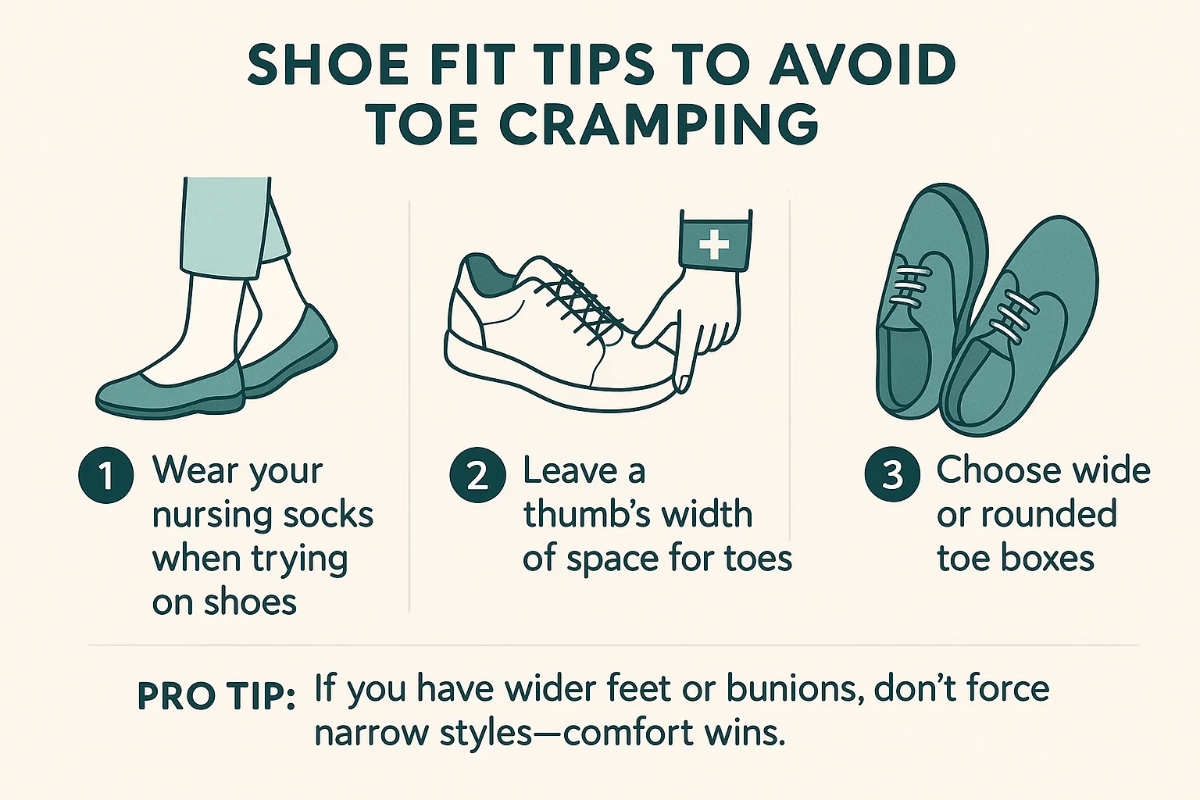
1. Wear your nursing socks when trying on shoes
It might seem simple, but always wear the socks you plan to wear on the job when trying on new shoes. Nursing socks or compression stockings add thickness and change how your foot fits inside the shoe. Skipping this step can mean your shoes feel fine in the store but end up too tight during your shift.
2. Leave enough room for your toes to wiggle
Here’s a rule of thumb—literally! When you stand inside your shoe, you should have about a thumb’s width (roughly half an inch) of space between your longest toe and the shoe’s front edge. This extra space lets your toes move naturally and prevents them from getting cramped as your feet swell through the day.
Ever felt that painful pressure on your toes after hours on your feet? That’s usually because there’s no room to move.
3. Look for wide or rounded toe boxes
Not all shoes are created equal in the toe department. Shoes with wide or rounded toe boxes are your best friends if you want to dodge toe cramping. They give your toes room to spread out instead of squeezing them into a narrow, pinching space.
Think of it like upgrading from tight jeans to your favorite comfy pair — your toes deserve the same freedom.
Pro Tip: If you’re dealing with wider feet or bunions, don’t force yourself into narrow styles just because they look nice. Comfort and foot health always win.
If you want to dive deeper into shoe styles that work best for wider feet, check out the Best Shoes for Nurses with Wide Feet It’s packed with helpful tips to keep your feet happy all day long.
Have you ever bought shoes that looked great but hurt your toes? What did you do next? Share your stories — sometimes the best advice comes from real experiences!
How to Reduce Friction on Toes in Work Shoes
If you’ve ever dealt with painful blisters or red, irritated skin on your toes after a long shift, you know just how much friction can ruin your day. The constant rubbing inside your work shoes is no joke, but the good news is—you don’t have to suffer through it.
Here’s how you can reduce friction on your toes and keep your feet happy, healthy, and blister-free.
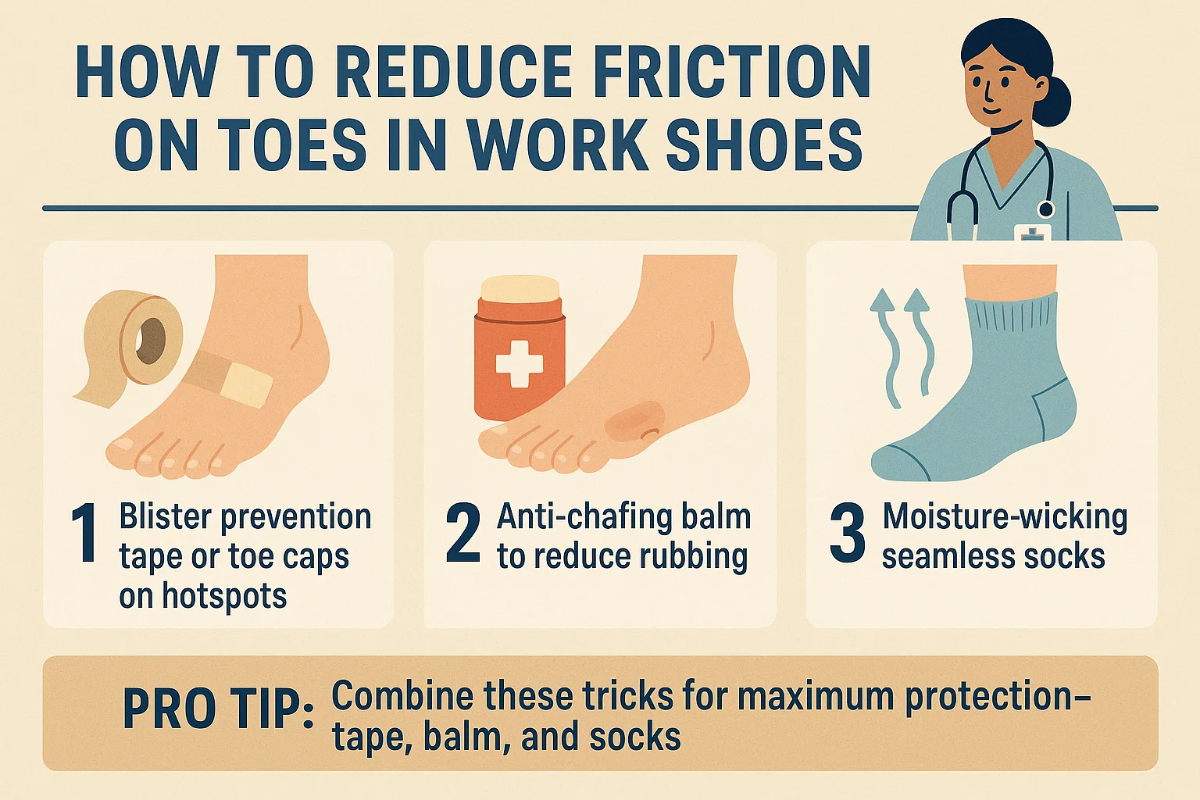
1. Use blister prevention tape or toe caps on hot spots
Ever noticed certain parts of your toes get sore faster than others? That’s a friction hotspot. Protect those areas by applying blister prevention tape or silicone toe caps before you slip on your shoes. These act as a soft barrier between your skin and shoe, cutting down the rubbing that causes blisters.
This quick step can save you from hours of discomfort — plus, it’s easy to carry extras with you just in case.
2. Apply anti-chafing balm to reduce rubbing
Anti-chafing balms aren’t just for runners! A thin layer of this slippery balm on your toes can dramatically reduce friction. It creates a smooth surface that lets your skin glide against the shoe instead of catching and rubbing raw.
It’s especially helpful on days when you know you’ll be on your feet for a marathon shift.
3. Wear seamless, moisture-wicking socks to keep feet dry and comfortable
Moisture is the enemy when it comes to friction. Damp skin softens and becomes more prone to irritation and blisters. That’s why seamless, moisture-wicking socks are a must-have for nurses and healthcare workers.
These socks pull sweat away from your feet and reduce the rubbing caused by bulky seams, keeping your toes dry and snug all day long.
Pro Tip: Combine these tricks for maximum protection—tape the hotspots, swipe on balm, and wear your best socks. Your toes will thank you!
Have you ever tried any of these methods? Or maybe you have your own secret weapon against toe friction? I’d love to hear what works for you!
Steps to Relieve Toe Pain from Nurse Shoes After Long Shifts
After a long, demanding shift on your feet, your toes might be screaming for relief. It’s totally normal, but ignoring that pain can lead to bigger problems down the road. So, how can you give your hardworking toes the care they deserve?
1. Ice and elevate your feet to reduce swelling
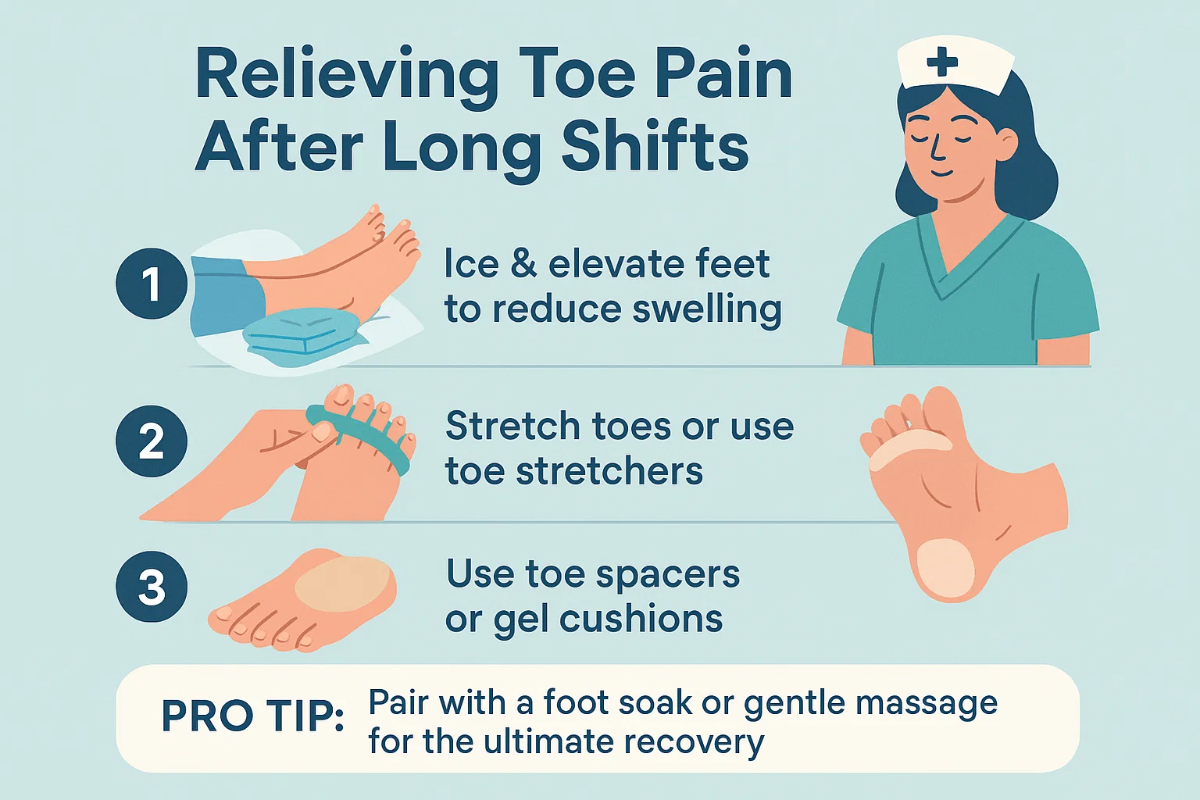
One of the simplest and most effective ways to calm sore toes is to ice them. Wrap some ice cubes in a towel or use a cold pack and apply it to your toes for about 15 minutes. This helps reduce inflammation and numb the pain.
While you’re at it, elevate your feet by propping them up on a pillow or stool. Gravity will help drain excess fluid, cutting down swelling and discomfort.
2. Stretch your toes gently or use toe stretchers to loosen tight muscles
Have you ever felt that tight, cramped sensation in your toes after standing all day? That’s a sign your muscles need some TLC. Try simple stretches like spreading your toes wide, curling them, or even grabbing a tennis ball to roll under your feet.
For an extra boost, toe stretchers can work wonders. These small devices help gently separate your toes and improve circulation, easing tension and stiffness.
3. Use toe spacers or gel cushions to ease pressure and realign toes
If your toes feel cramped or rubbing together, toe spacers or gel cushions can be lifesavers. They help distribute pressure evenly and prevent painful friction between toes. Plus, they assist in realigning your toes if they’ve been pushed out of place by tight shoes.
Wearing these after a shift gives your toes a chance to relax and recover properly.
Pro Tip: Pair these relief techniques with a soothing foot soak or gentle massage for the ultimate end-of-day treat.
Feeling the difference after trying these? Or maybe you have your own routine to relieve toe pain? I’d love to hear how you care for your feet after a tough shift.
Want more foot care tips tailored just for nurses? Check out How to Take Care of Your Feet and keep those toes happy and healthy!
Recommended Products
Product | Specialities | |
Toe Spacers | Separate and Align Toes | |
Cushioned Socks | Designed For Long Shift Comfort | |
Anti Friction Balms | Prevents Shoe Friction | |
Protective Shoe Pads | Long Term Relief From Shoe Friction |
Conclusion
Toe pain from nurse shoes doesn’t have to be your daily struggle. With the right footwear choices, such as roomy toe boxes and a proper fit, combined with smart habits and simple relief techniques, you can protect your feet and stay comfortable throughout even the longest shifts.
Remember, your feet are the foundation of your hard work, so giving them the care they need pays off big time.
FAQs
Why do my toes hurt after nursing shifts?
Standing and walking for hours in shoes that don’t fit right can cause pressure and reduce circulation, leading to pain.
Are tight shoes causing numbness in my toes?
Yes, tight footwear compresses nerves and blood vessels, often causing numbness.
How can I relieve toe pressure from standing all day?
Choose shoes with wide toe boxes and use cushions or spacers to reduce pressure.
What are the best shoes for nurses with toe pain?
Look for nursing shoes with roomy, rounded toe boxes and soft, flexible materials.
How do I avoid toe blisters in work shoes?
Reduce friction by using blister tape, anti-chafing balm, and moisture-wicking socks.
Leave a Reply